
How to Find Inspiration for Any Project: Crochet Included
We all know those apps, the one where you save ideas you like to a virtual board that just keeps growing. Or the ones that suck you into a wormhole of short clips leaving you glazed over hours later.
This is where I used to find myself first turning to for inspiration - I need an idea, and the small rectangle I hold in my hand houses millions of ideas and projects at a single tap. The algorithm knows what I like, and will give me something that feels “like me”. It’s simple, easy, and I can immediately dive into my next project.
Although social media platforms like Pinterest, Instagram and YouTube are great for tutorials and techniques, there are better places to stretch our brains - pushing us to dive into our imaginations, instead of copy-pasting from others. Now, I’m not declaring you swear off all social media for art use, but rather, change the timing and strategy of when you do.
The way of inspiration searching I’ll explore works for any project or medium. This idea is to get your brain buzzing, imagination reeling, and hands moving. Creating instead of consuming. The difference for your project is how you apply this inspiration: a fresh color palette, practice with shape sketching, new stitch styles… the list goes on. Inspiration can come from literally anywhere, as I’ll show with a recent personal art project - blending watercolors and digital art.
The “Short List” of How to Find Inspiration for Art
Below is my “Short List” of steps for finding art inspiration. This order is flexible, depending on the ideas (or lack of) already in my head, and materials I have on hand.
Explore a new environment
Be still & present
Pick one point of focus
Work with one medium (to start)
Dive into techniques
Explore a new environment
Go outside! Get out of your house! Go somewhere new, or somewhere you haven’t seen in a while - or ever. Exposure to new scenery = new information for your brain to take in, which can lead to original thoughts, ideas, and feelings. Natural environments, and environments that bring visual stimulation and social space in general, have been shown to help boost creativity in individuals.
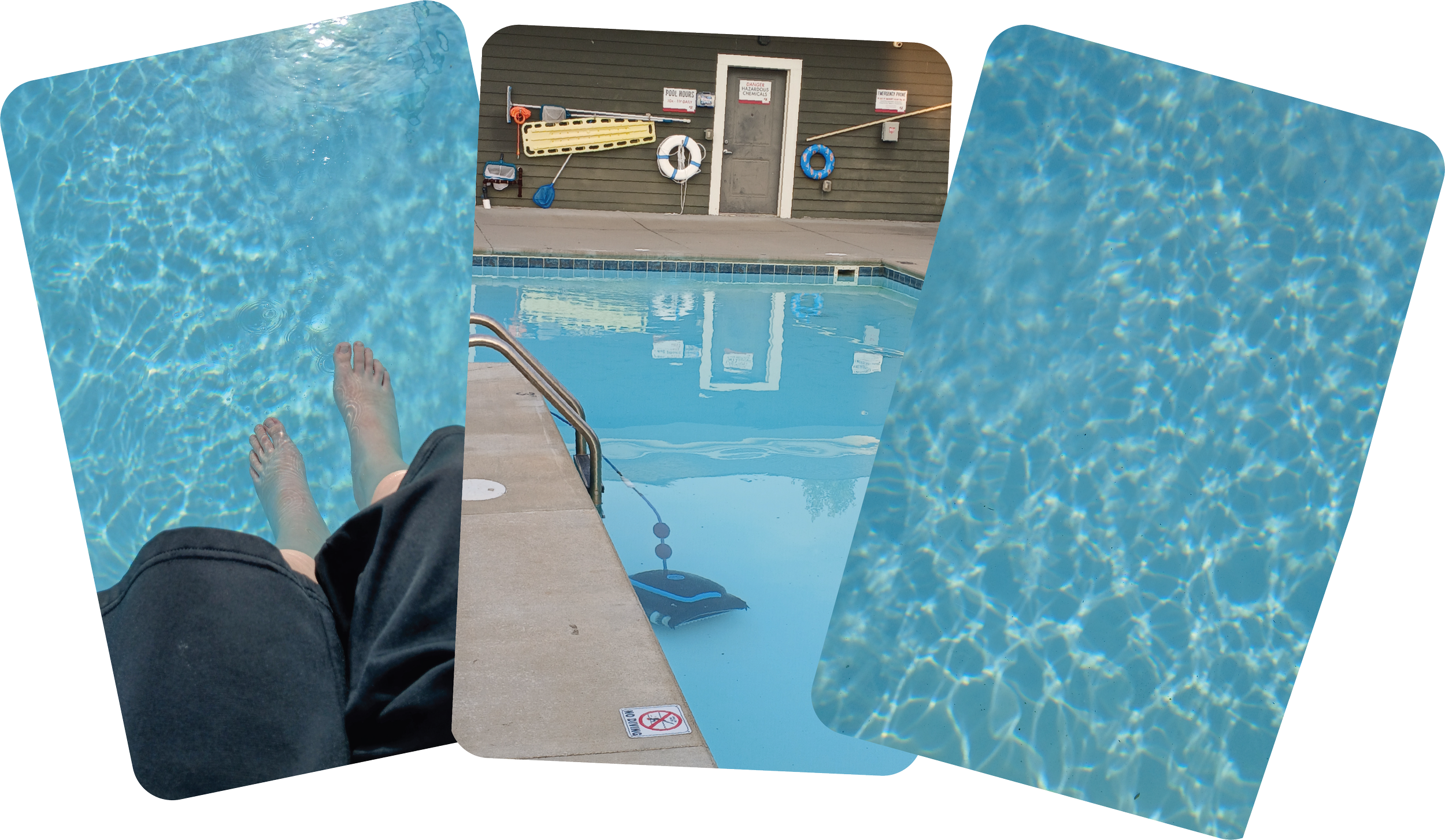
Poolside views that inspired my watercolor project.
Additionally, live references are better than pictures.* While immersing your whole body in a new space, you’re able to watch how things move, look and change as time passes. Colors are the most vibrant, shapes the most clear, and movement is flowing. You feel the energy of the space, rather than stare and assume what it could be.
*Note: When I discuss live references over pictures/photos, I’m referencing photos taken on one’s phone, or searched on the internet - not stills or pieces in a gallery, museum, or elsewhere. Photos are great if you don’t have the time or resources to work on a project, but want to hold onto that inspiration.
2. Be still & present
No phone. No music. Just sit still. Exist. Absorb. Look around. Listen.
I like to think of this step like a meditation - bringing awareness to oneself in an environment, and noticing elements around you (similar to the meditation practice of noting). Look at everything around you. Listen to conversations of people or birds. See if you can smell the coffee wafting around you in a cafe, or honeysuckle while on a wooded trail.
Here, you’re taking stock of the environment. What sticks out? What draws you in? What are your eyes drawn to? Your nose? Your ears? What’s dissonant? What’s harmonious?
Everything little and large, loud and quiet, textured and smooth. These things that catch and hold your attention become your potential inspiration points.
3. Pick one point of focus
Now that you’ve identified your personal “attention grabbers”, select one to focus on for the moment. By selecting one inspiration point, your brain gets a chance to really dive into the details, and your imagination surrounding it.
The flood of details and input to your brain turns into a small, bubbling stream. The starting points for your project start to become clearer.
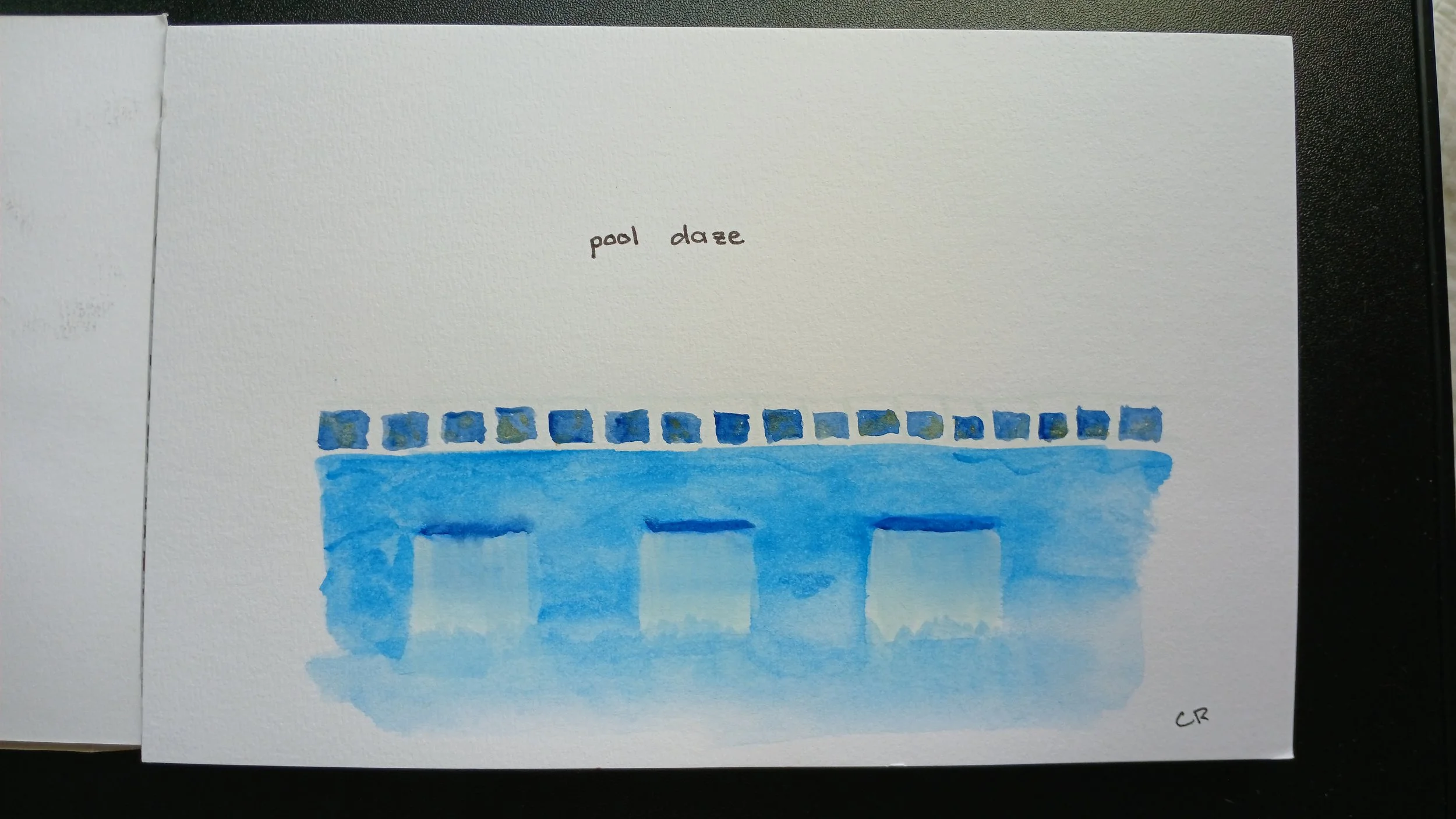
For my poolside watercolor project, I captured the dark, variegated tile work on the edge of the pool. I paired it with the bright contrast I saw in the water, and included the swim-up barstools - a place I love to wade a read a book.
The coffee shop becomes a water droplet slowly rolls down the side of an iced coffee, widening the puddle below on the counter. The community bulletin board turns into the curl of the ragged corner of a sun-faded poster haphazardly taped.
You can take photos, write a list, sketch and more to capture other inspiration points you may want to use in the future.
4. Work with one medium (to start)
I know this can be challenging for us crafters who jump from crochet to painting to beading to who knows what else, but trust me on this. Just like we narrowed our inspiration, it’s important to narrow our tools and approach in the beginning of a project. Minimizing our starting choices allows us to take in the detail and energy of our focus point. Less for our brain to choose from, and the more effectively we can capture our inspiration (and quicker for capturing moving inspiration pieces, like people).
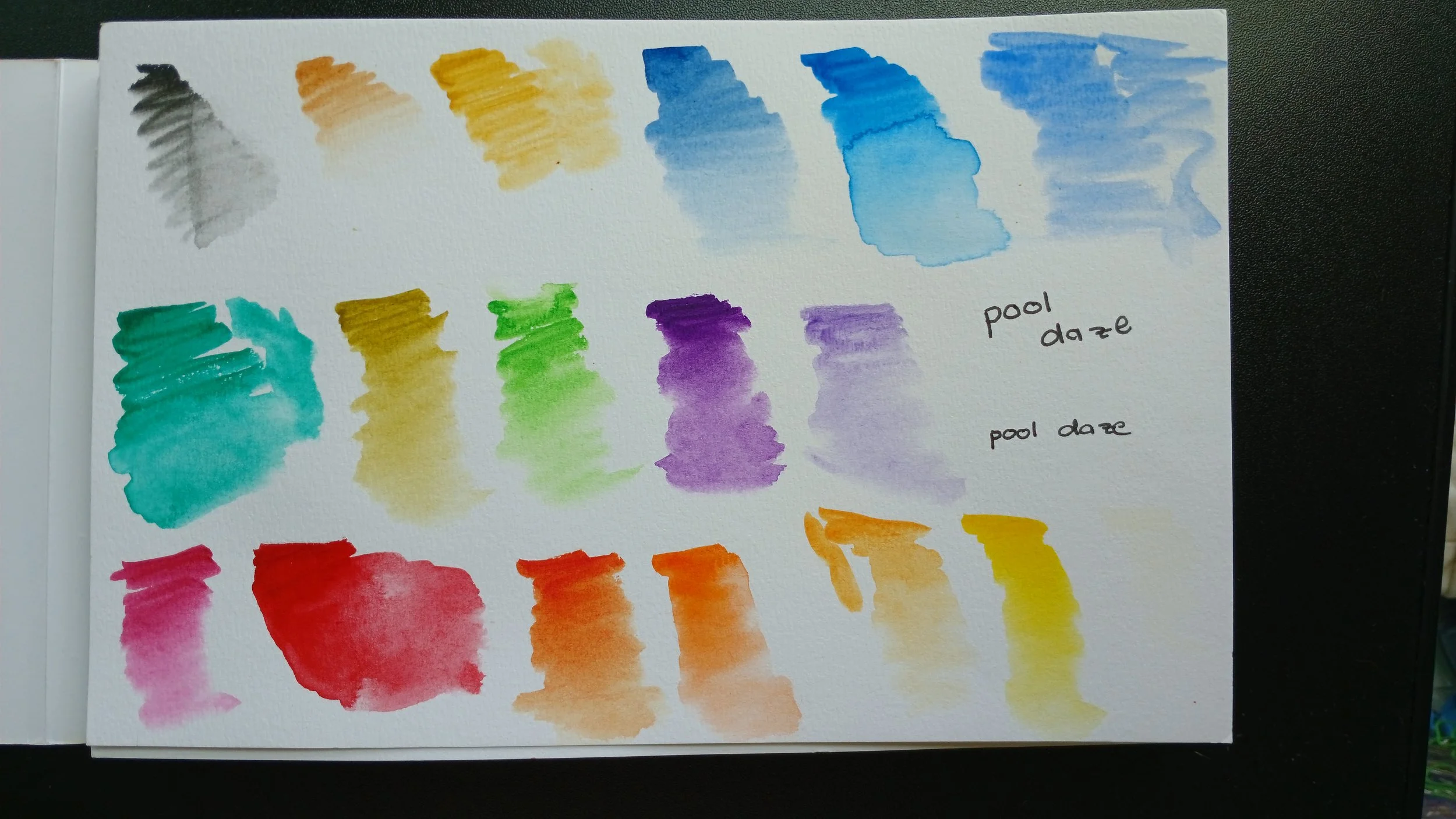
Swatches from a mini watercolor palette I used for my poolside project. I only used watercolors and a pen when first creating.
This is also a great time to take stock of your art supplies, and see what you can use.
For projects that are not as mobile, use simple techniques to capture your inspiration pieces. Take photos and videos to capture colors and movement, sketch to capture shapes and layouts, write notes on details your senses pick up on. Capture your inspiration pieces in a way that brings you right back to that space once you return to your project.
My Favorite and Recent Mediums & Projects
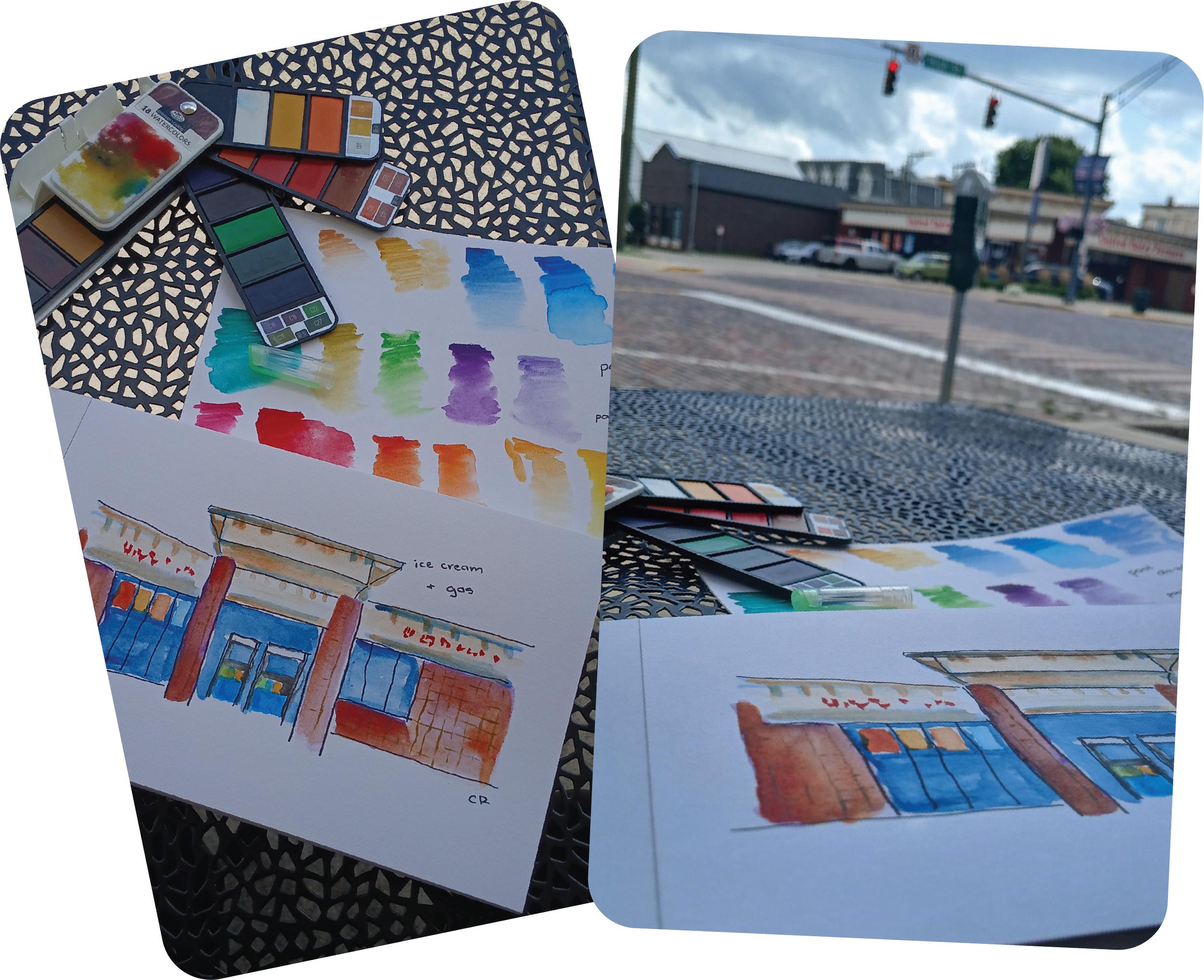
A mini watercolor kit and paper I love to take with me on coffee shop adventures.
Pen & journal for sketching & notes
Watercolors mini kit
Oil pastels
Photography/Digital Art
Crochet (most often a WIP)
5. Dive into techniques
You’ve found your sparks, now explore HOW you can apply your inspiration to your project and medium.
Talk to fellow crafters and artists to learn about their methods, check out a step-by-step book from your local library, attend a workshop local to you, and yes, you can turn to social media as well - NOT as your inspiration, but rather as a resource for HOW to apply your inspiration. Find a crochet stitch that looks like the flower bud you saw in the forest, explore painting styles to bring your coffee cup condensation to life. Take time to dive into the possibilities of your art medium, and bring your inspo to life.
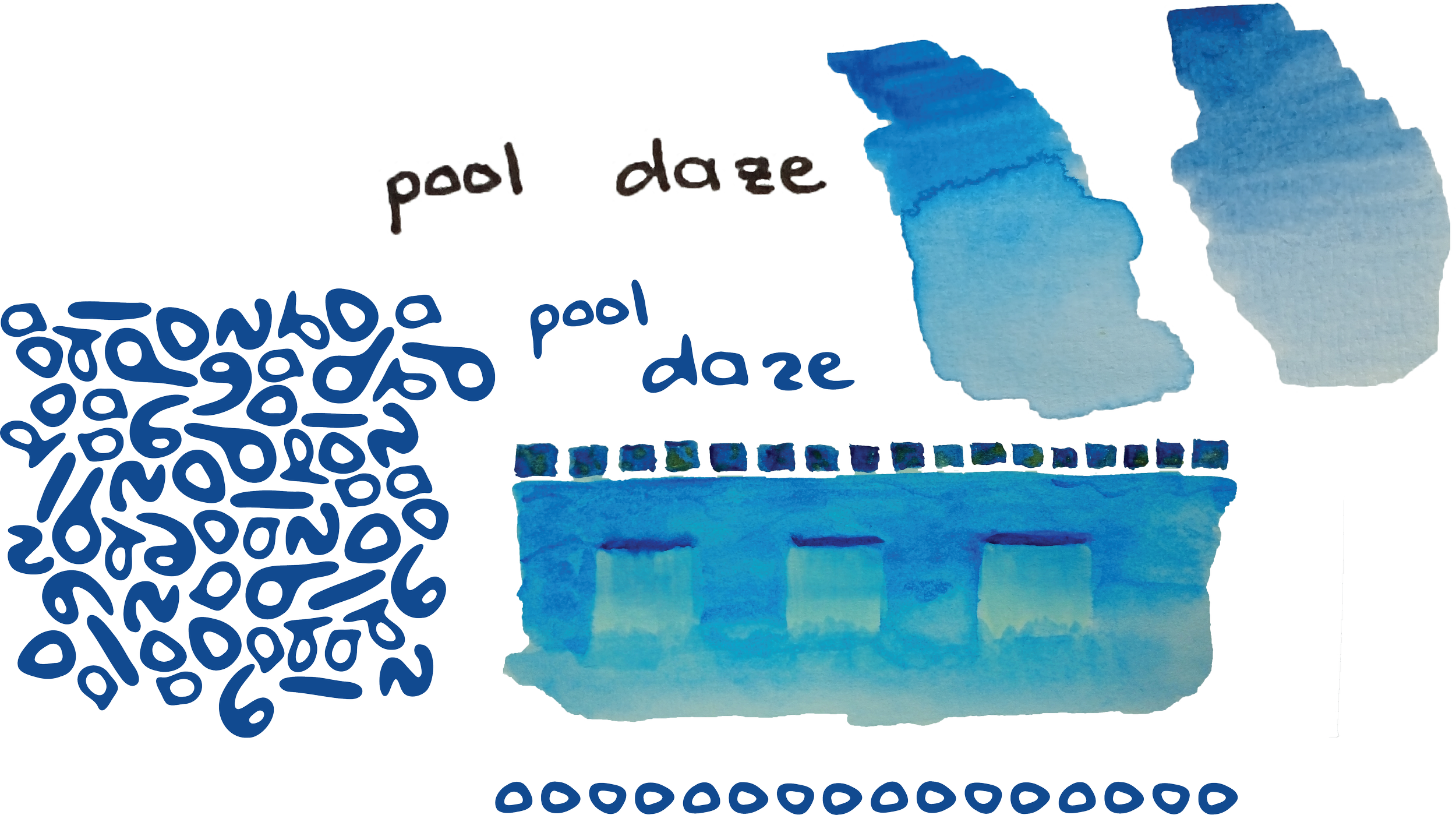
Watercolor swatches, pictures, and handwriting I digitally edited from my poolside watercolor picture.
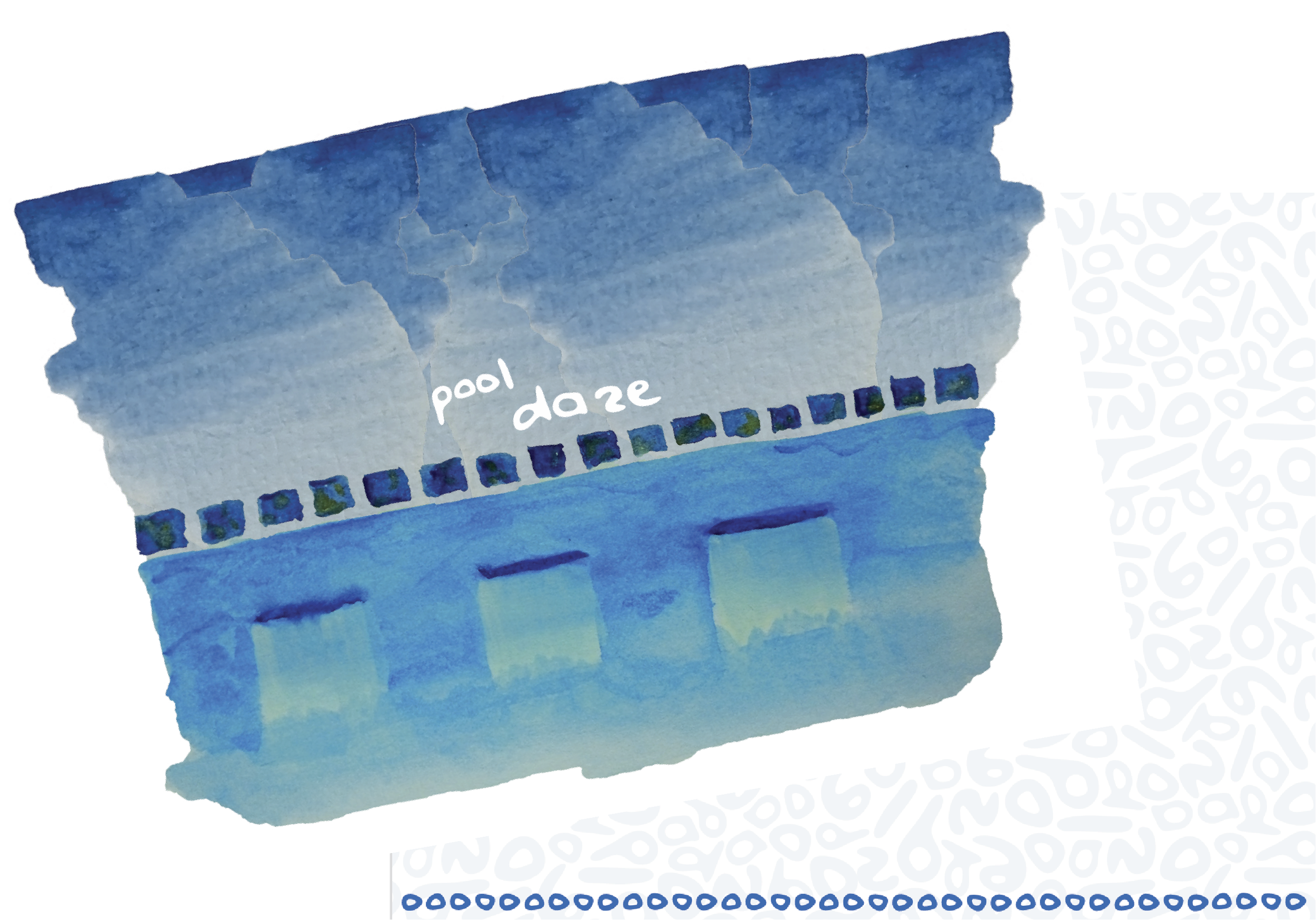
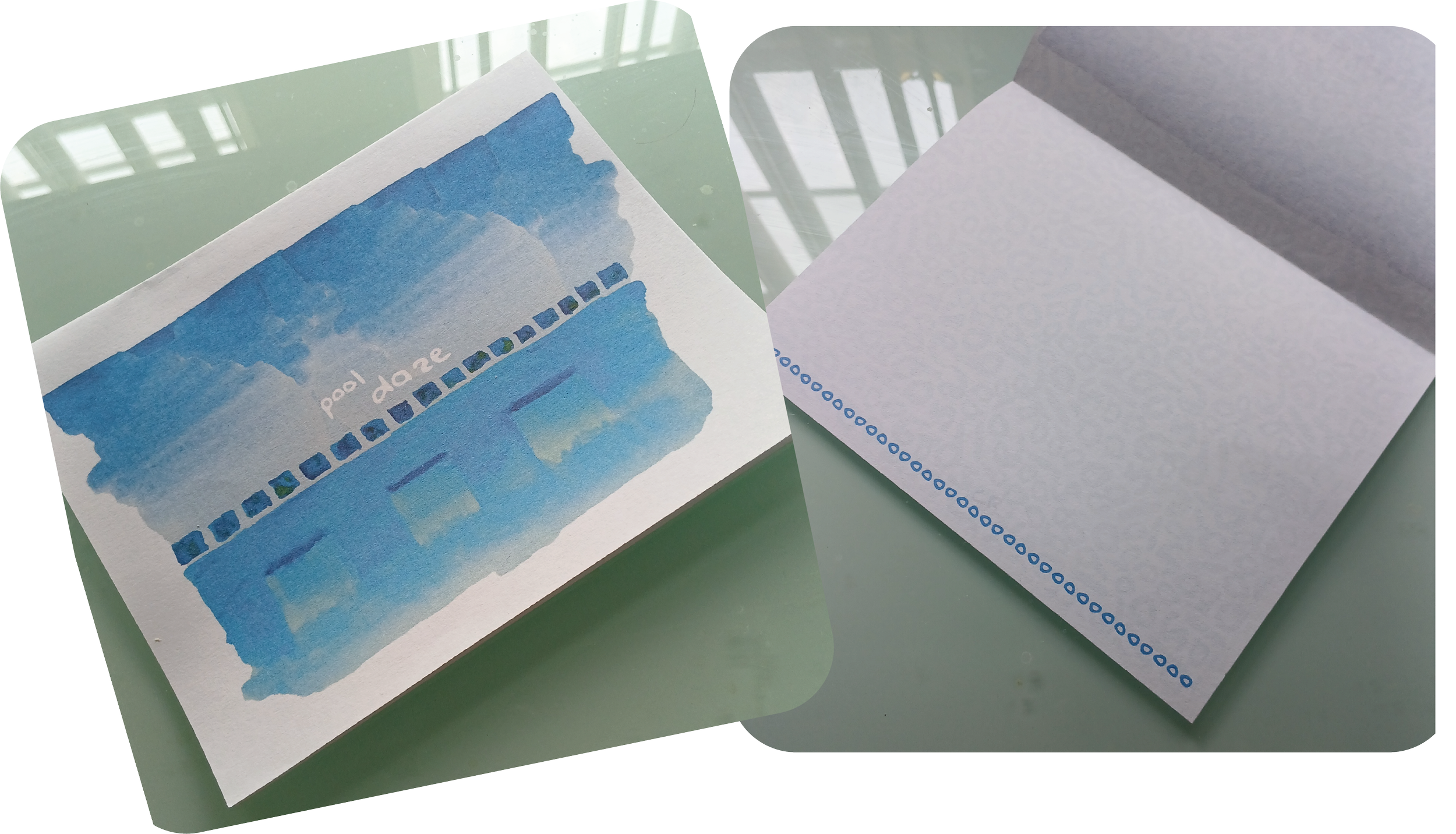
The final pool-inspired greeting card I made and sent to pen pals using my original watercolor sketch.
Playing with the “Order of Inspiration”
Inspiration can come from any place, at any time. These steps are not concrete, and I find myself mixing them as I craft.
There’s times I look at my yarn stash, see the color and texture, and know what type of project I want to make. Other times, I have a craving to do a certain craft, such as painting, but don’t know what subject to use. That’s when I bring supplies to a place and create art in the moment.
Inspiration & Crochet
Crochet tends to be a more intensive craft, requiring some form of planning before working on a project; including stitches to be used, yarn type, and pattern selection. My inspo “short list” gets switched up so I can use what yarns I have and make the project types I want and will use.
Here’s some examples of how I switch the order so I can adapt to my needs and materials, without losing original sparks of inspiration.
Original Inspiration Short List Order: Explore, then gather.
I work in order from my Inspiration Short List, when starting from absolute scratch on a crochet project. Committing to a brand new project, yarn, and technique can be expensive - from a wallet and brain capacity standpoint.
Steps 1-2 remain the same. I use step 3. Pick one point of focus, to explore environments, and collect inspiration points: photos, sketches, notes.
I then search for yarn colors and explore stitch techniques (Steps 4 & 5), ensuring they match my point of inspiration, and work for the project I have in mind.
Starting with Step 4. Work with one medium
Crocheting over the past 4 (ish) years, I’ve gathered a wide collection of yarns; from thrifted acrylics and blends, to handmade and hand-dyed natural yarns from indie fiber shops. Sometimes, just by looking at a yarn, I get a vibe and general idea of what to make.
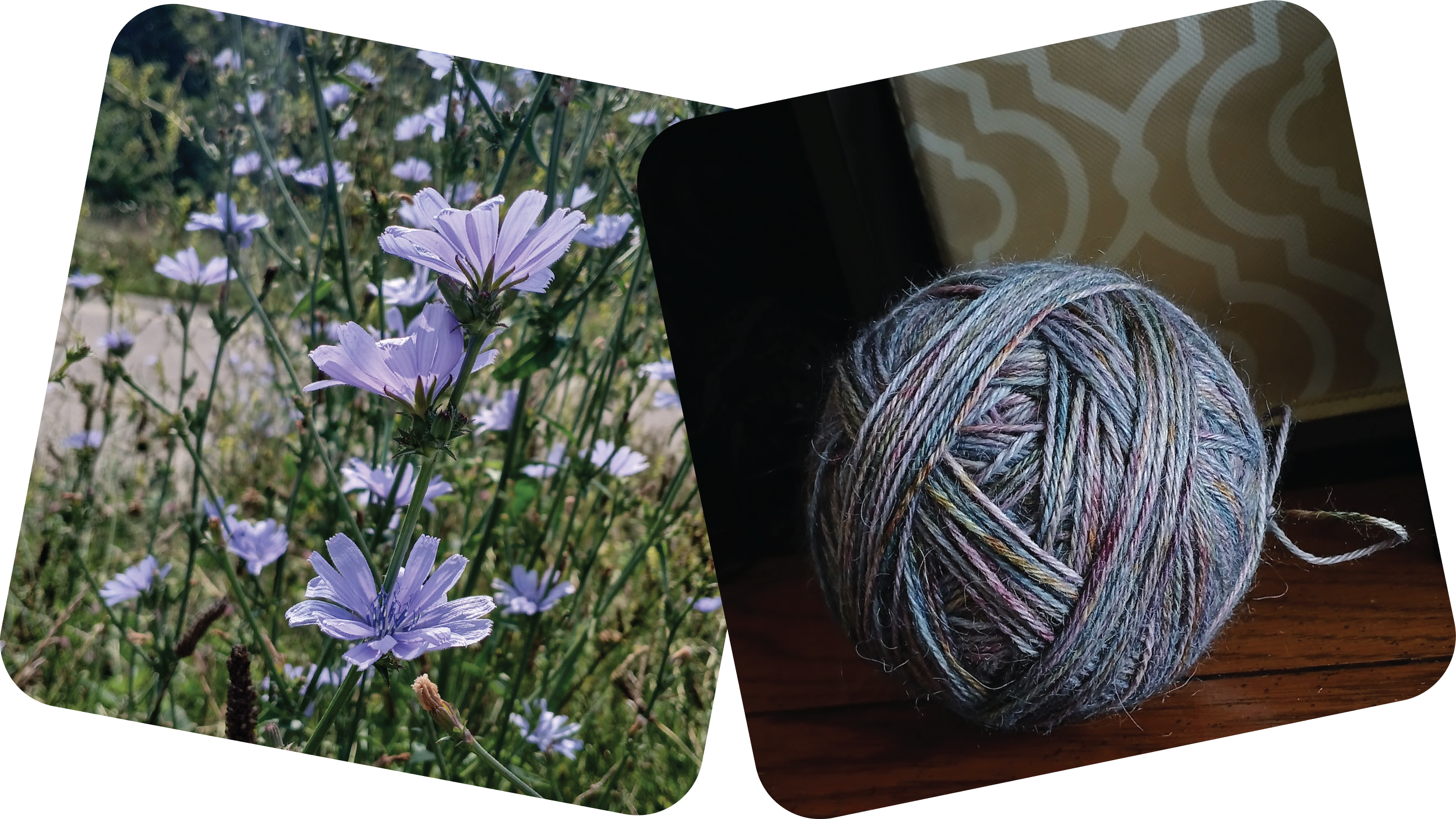
This yarn I dyed myself is just begging to be turned into some sort of whimsical, flower-fairy top.
Yarn types also lend themselves well to certain project types, which helps to guide my project path. I love natural fibers for breathable wearables, and acrylics for blankets and hats. My inspiration for these projects often comes from technique exploration.
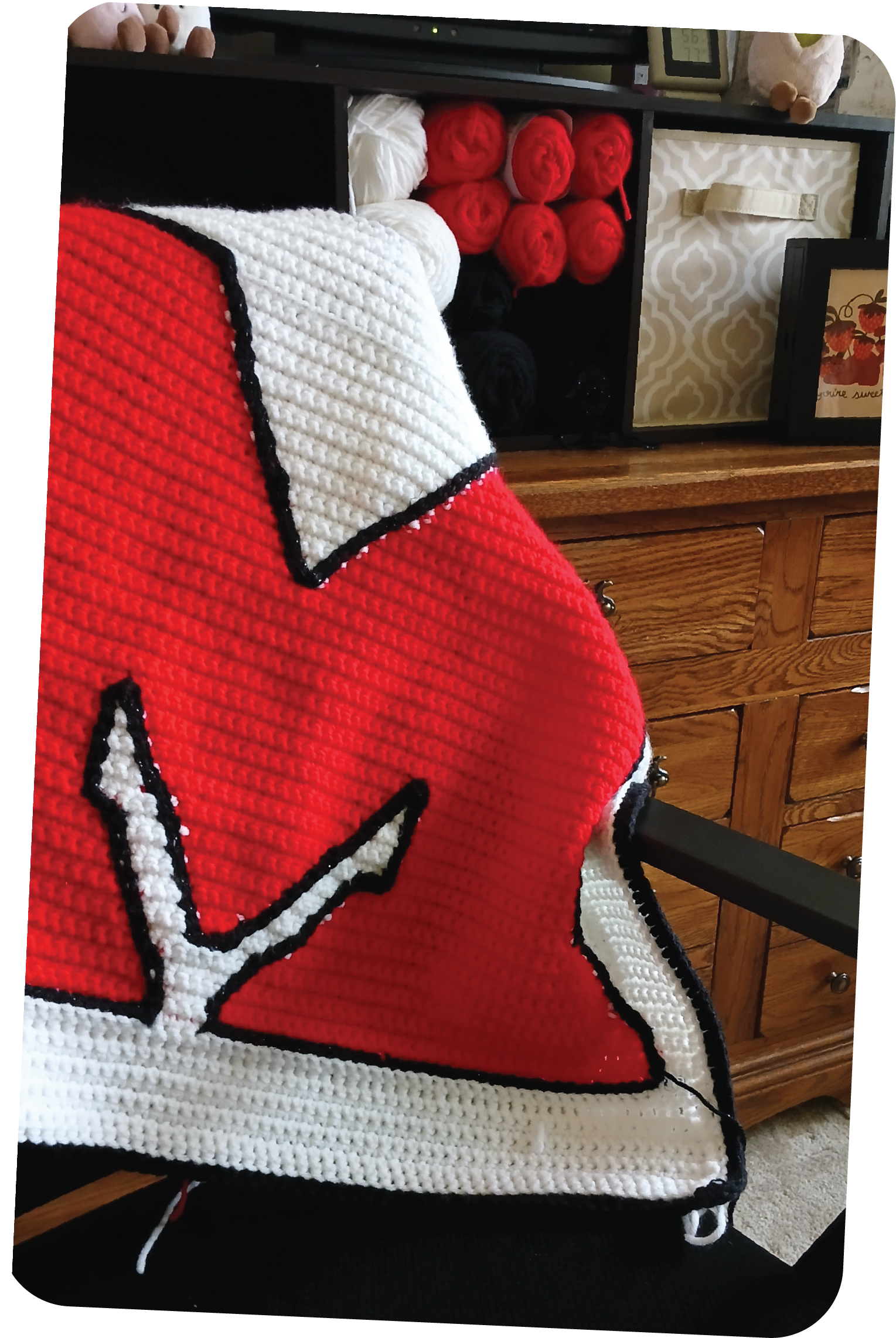
The inspiration for my Miami University crochet blanket came from thrifted yarn I found in red, white, and black. I explored basic mosaic crochet for this center block. I’ll be referencing my crochet books for granny square patterns to try for the border.
Starting with Step 5. Dive into techniques
After choosing the project I want to create, I dive into my vintage crochet handbooks - my thrift finds and hand-me-downs from my grandma. Something as simple as a stitch type can elevate a project to the next level.
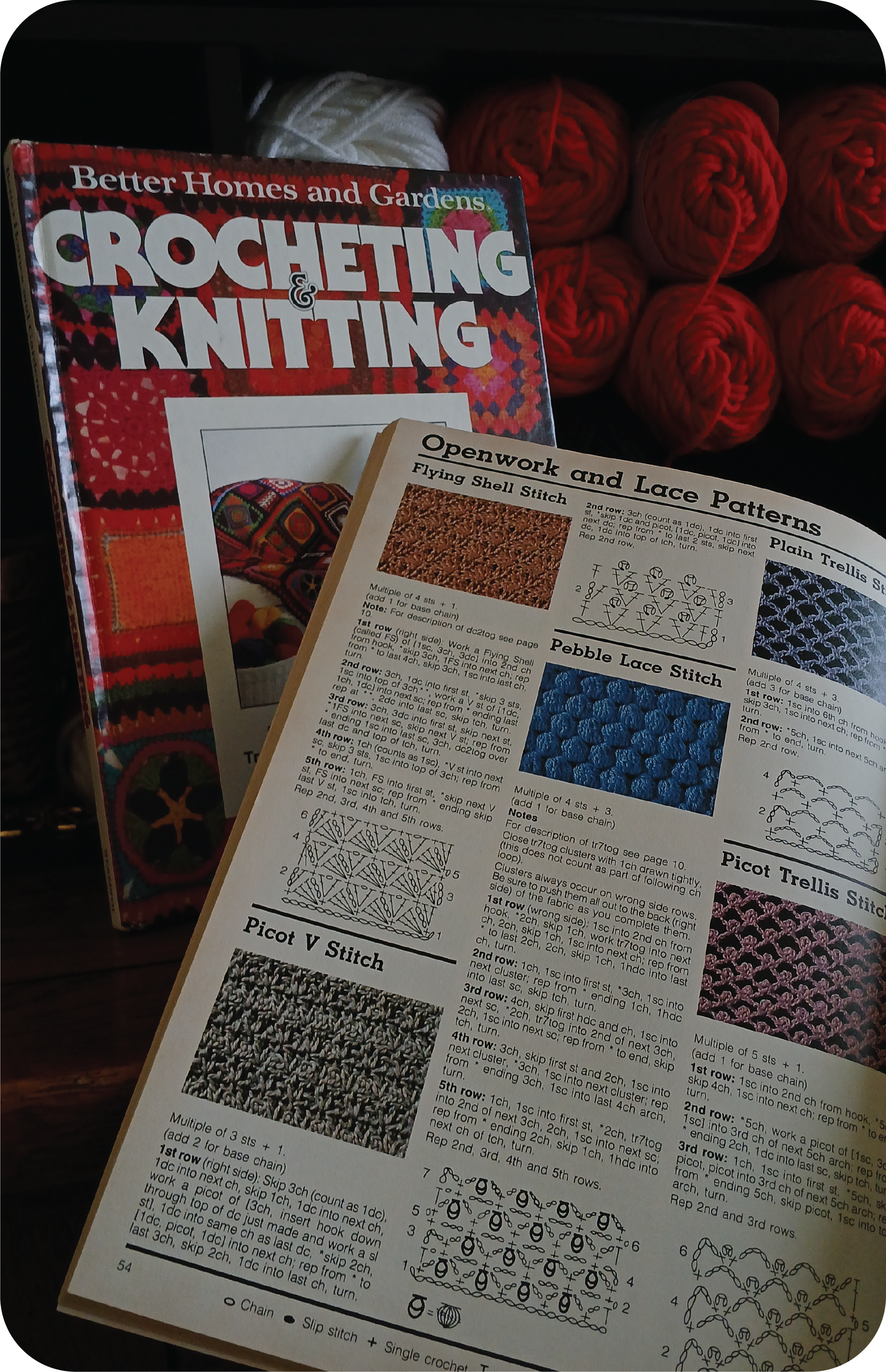
Two of my favorite vintage crochet books. I love turning to these to find unique stitches and motifs.
Not only are my projects elevated in texture and appearance, I also build new skills and techniques that I can use on future projects. These new techniques and patterns also turn a piece from something I glaze over and finish to a mental challenge or game for me to complete.
Final Takeaways
Go forth and craft! Remember, creation > consumption. Leverage the environments and spaces around you, not the rectangle box in your pocket, to find inspiration for original projects. Connect with others in the crafting community for tips, techniques, and tools. Social media is great for technique refinement, but should not be your main starting point for inspiration.
Love ya froggies,
<3 Courtney
