Hey, Granny! How long does it take to get good at crochet?
“Hey Granny!
After seeing so many others hop on to the crochet train on social media, I want to start crocheting - but I’m not sure how. I’ve heard it takes a while, and you need a lot of supplies to get started. I’d hate to drop a bunch of money, only to get annoyed by slow progress and lose interest.
How long does it take to get good at crochet?
Sincerely,
Wannabe Crocheter”
Hey there, tadpole!
Unfortunately, the answer isn’t neat and tidy. At the end of the day, your skill grows with practice and experience - and when you “get good at crochet” depends on you.
There’s always more to learn, and you build experience as you go. Even us old Froggers are always picking up new tricks and methods. So here’s how I got started, and the best advice I’ve got to pass along to you crochet tadpoles.
Granny’s Journey
Like a lot of my froggy generation, I picked up crochet during COVID. I was stuck inside my childhood home, surrounded by abandoned projects and craft supplies, and I started digging through memories and old keepsakes - including the crochet starter kit my granny made and gave me.
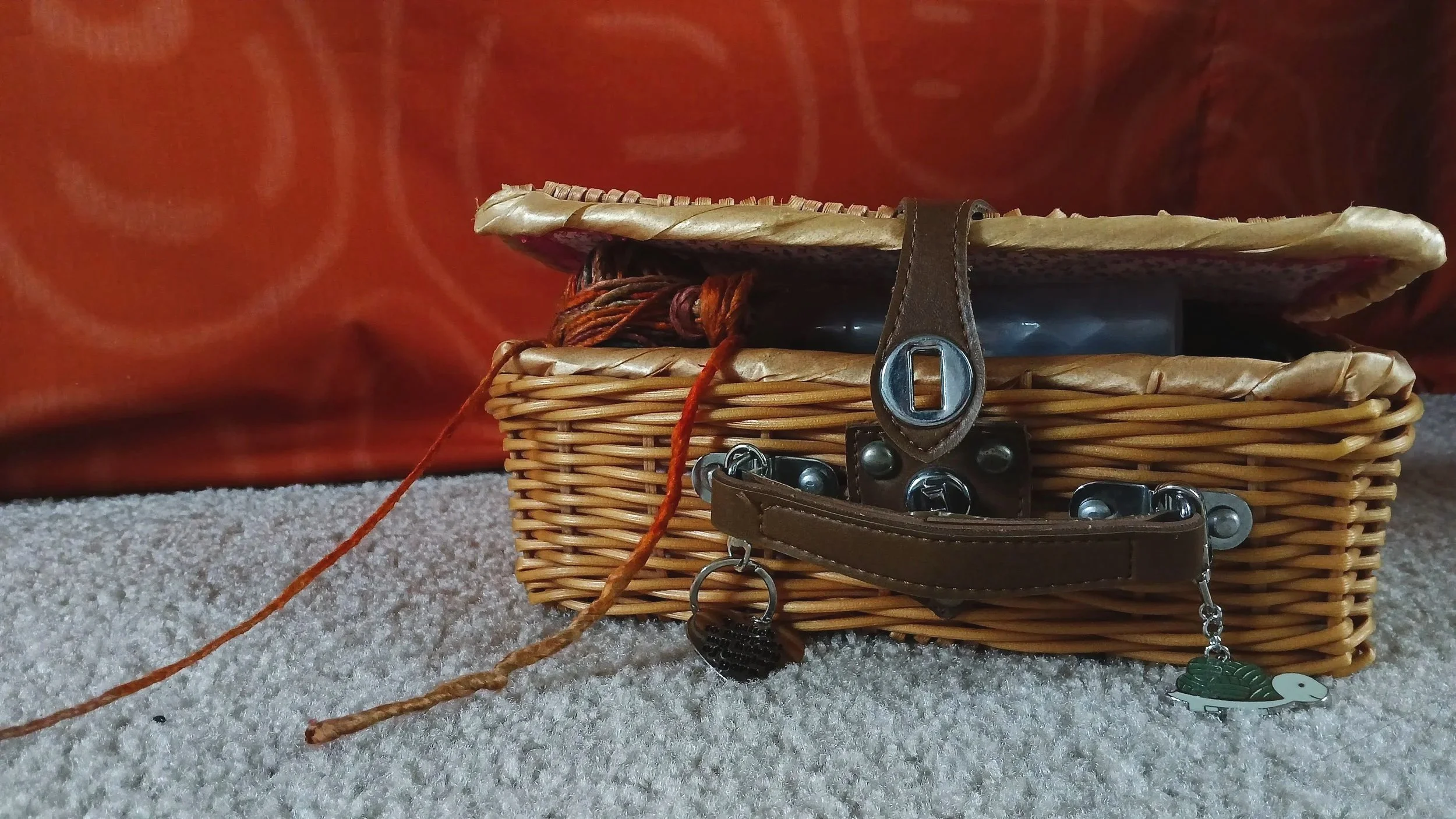
Granny’s original crochet basket kit that she still uses to this day!
Inside a latch-able woven basket was a crochet hook and a small stash of acrylic yarn. Paired with a custom-made starter binder - packed with printed stitch guides and crocheted sample stitches - I was ready to begin my stitch-filled little journey.
After picking my favorite yarn and the one hook I had, I did what any modern granny would do and looked up “how to crochet” on YouTube. I started with a basic square, or a pretty wonky rectangle, really, repeating single and double crochet stitches until I felt comfortable with them. Then I frogged it. For you beginner tadpoles, that means you take your project and “rip it, rip it” to unravel it.
Then I picked my first real project: an amigurumi duck. Good for beginners, this amigurumi pattern let me practice my tension and technique while making a cute little guy to keep when I was done.
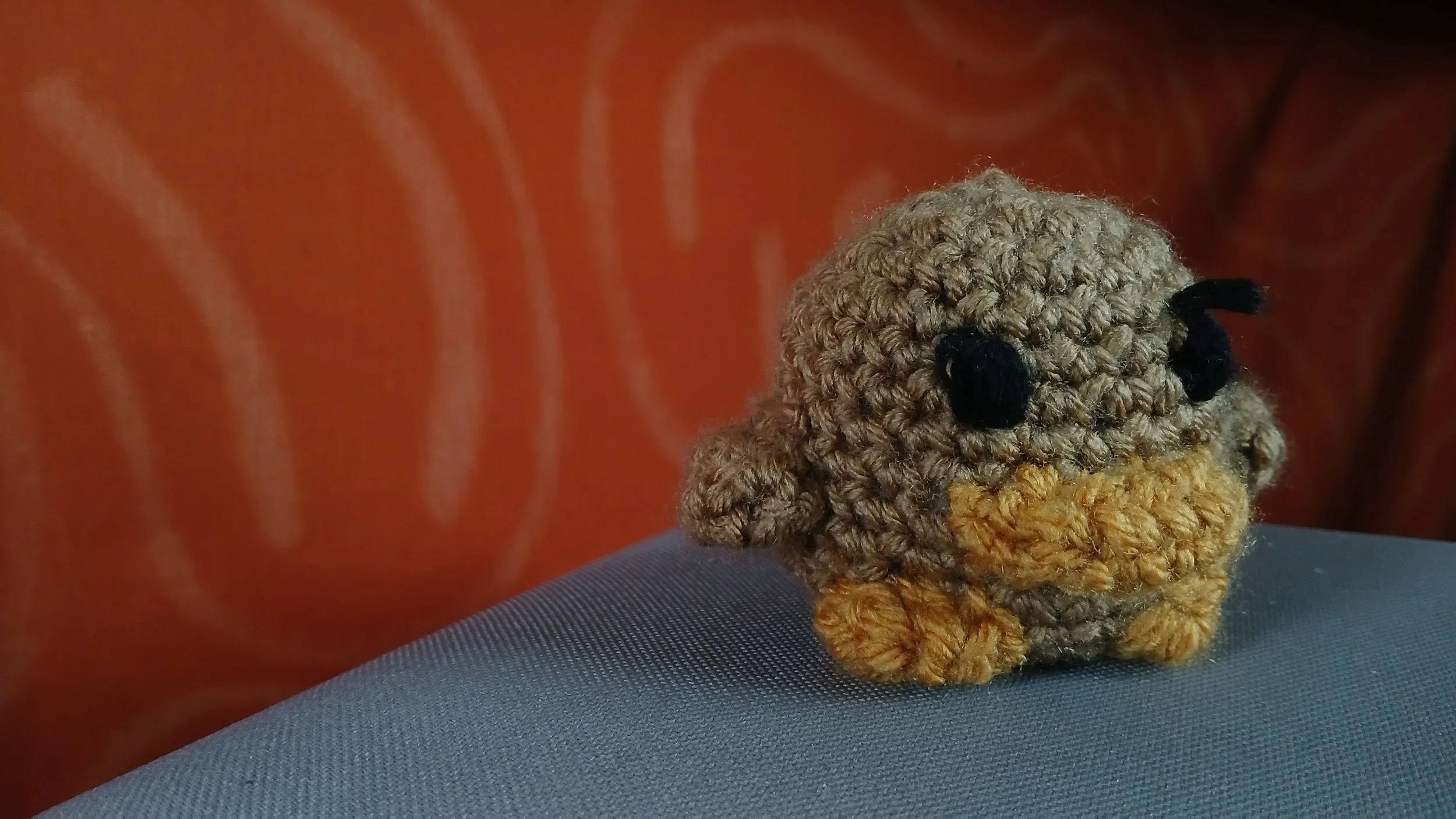
Granny’s first “real” crochet project - an amigurumi duck she now calls “work duck”.
Now, I didn’t have all the usual supplies an experienced crochet artist might use. I used bobby pins as stitch markers and kitchen scissors instead of thread snippers. I got lucky and found a big upholstery needle in my craft supplies, which let me add the final bill, feet, and eye details on my duck. He now has a permanent place on my home desk as a reminder of how far I’ve come.
After that, I went through an amigurumi animal phase to keep practicing my stitches and figure out how everything flows and connects. I kept following slowed-down, step-by-step video tutorials and pairing them with written patterns so I could build my understanding.
I started rummaging through thrift stores, and every so often the dollar store too, to build up my yarn stash and supplies without spending a fortune, and I kept moving into new projects. Then came my bucket hat phase, and that opened up a whole new crochet world.
The fiber arts group on my college campus, or the crochet club as I call it, helped me learn more techniques and discover new useful tools for the craft, like stitch markers, ergonomic hooks, and thread snippers. I found my crochet community there, where I could play, connect with other artists, and get inspired and fueled by what everyone else was making.
As I got better at stitches, reading patterns, memorizing them, and even freehanding, I expanded into shirts, hats, and granny squares. I even did my first commissioned project - a Twenty One Pilots cat-eared Clancy hat and hand warmers - without a set pattern. That’s when I really started having fun and found a spark in experimenting more instead of following every stitch like a robot.
Now that I’m a seasoned crochet artist, my work feels therapeutic. I connect emotionally with the pieces I make, and every stitch feels like an expression of my soul. I’m even a little superstitious. When I crochet, I stick to two philosophies (or superstitions):
Soul Trapping in Stitches: Often referenced as an Irish legend - and actually found in many other crafting cultures - this belief says crafters leave a little bit of their soul in every project they make. Crafters, especially crocheters, are advised to intentionally leave a mistake in their work so their soul can escape.
Weaving Emotions and Intentions: As many crocheters have found, crochet brings mental health benefits, with stitch repetition bringing a similar sensation to meditation and offering a way to let things out. I really appreciate the post-crochet feelings and benefits, so I’m also careful about the energy and intention I bring when I crochet. I try to be calm and clear before I sit down. If I’m tense or frustrated, I go do something else, because I don’t want that energy getting trapped or tangled up in my work. It’s a little backwards from the mental health philosophy, but it’s what feels right to me.
A trodden path - My Starter Techniques
Be resourceful and thrifty! Use what you have!
“But Granny, I’ve never crocheted before. What do you mean, use what I have?”
What I mean is: don’t go on a shopping spree and come home with a many-dollars-worth haul of hooks, yarn, stitch markers, and everything else under the sun. A lot of the materials I started with were hand-me-downs, or substitute tools I already had in my craft stash or lying around the house. As you grow as a crochet artist, get the stitches down, and take on more complicated projects, then you can start building your stash. Here’s what I substituted for common crochet supplies, and how my supply collection has grown.
Crochet Supplies Guide
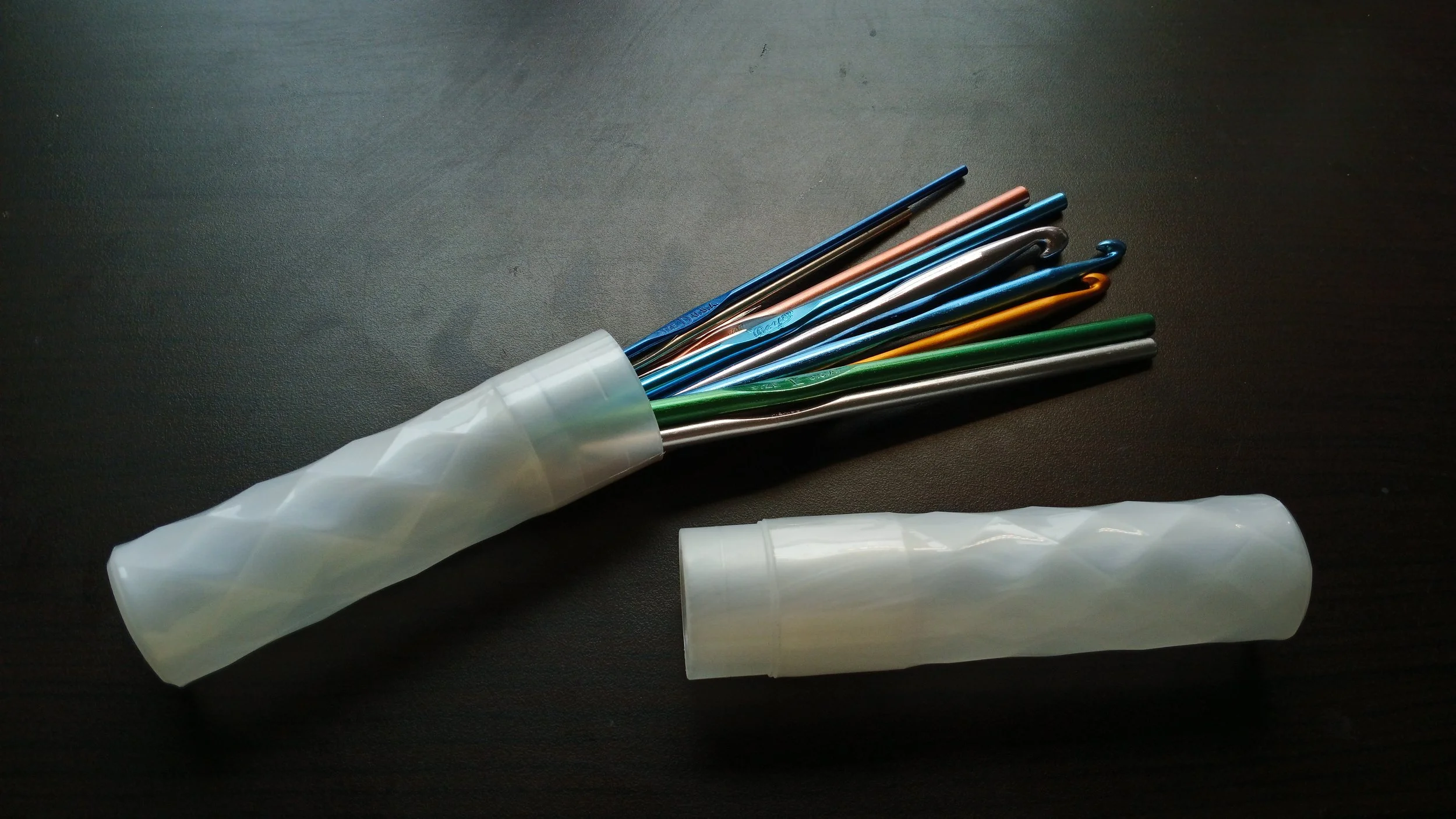
Crochet Hooks
Then: hand-me downs
Now: hand-me-downs, thrifted
My advice: Borrow, thrift, or buy. Start with a medium-weight hook (4.5 mm - 5.5 mm is my go-to range). Know your prices - especially when thrifting.
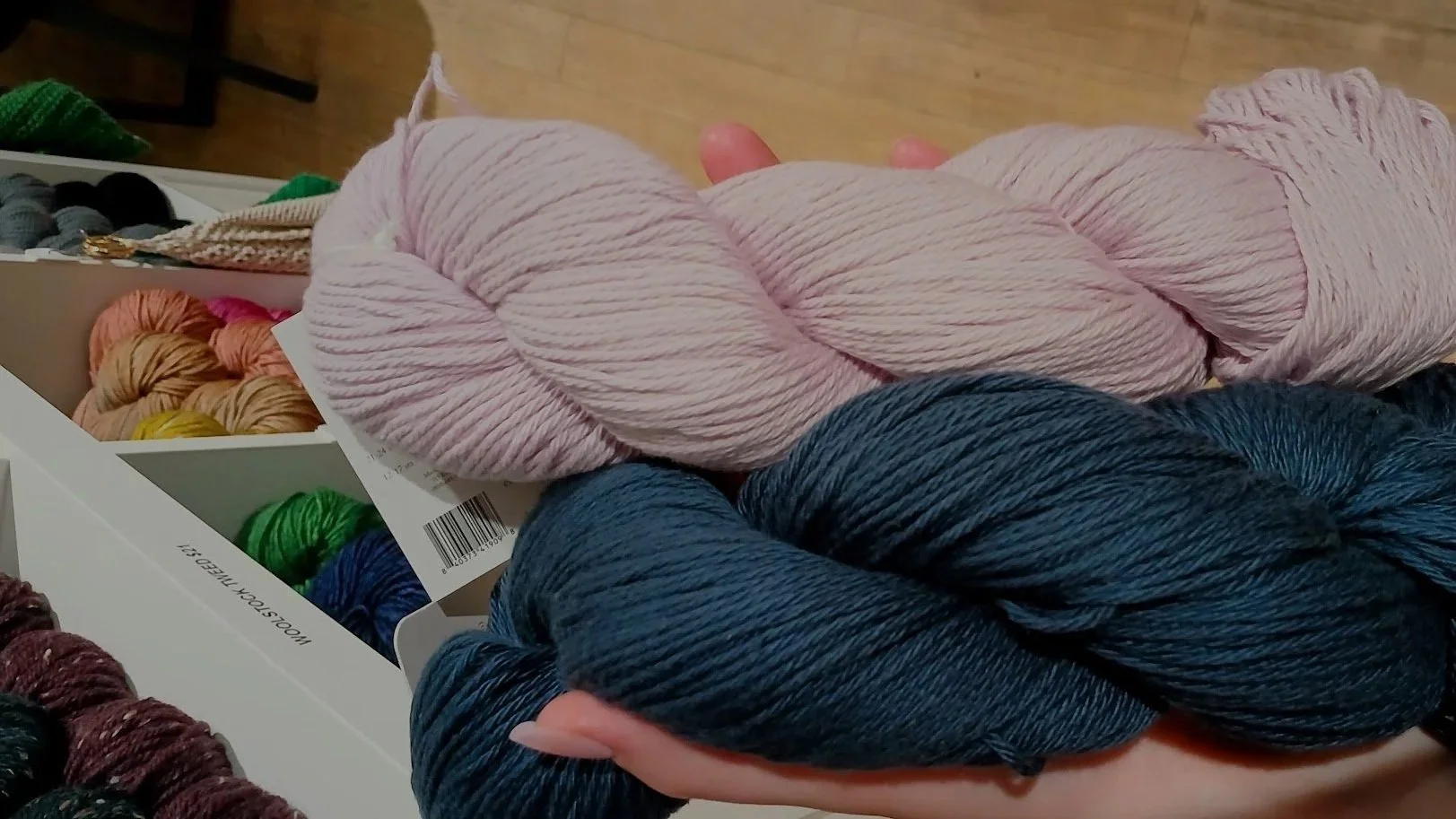
Yarn
Then: hand-me-downs, dollar store, thrift store
Now: thrift stores, indie yarn and fiber shops, occasional craft store
My advice: Start with a medium-weight yarn (4-5 weight, see our yarn guide chart here), with a distinct color - not black or white. I’ve found acrylic is the most user-friendly. There are even easy-crochet yarns like in Woobles kits that are great for beginners.
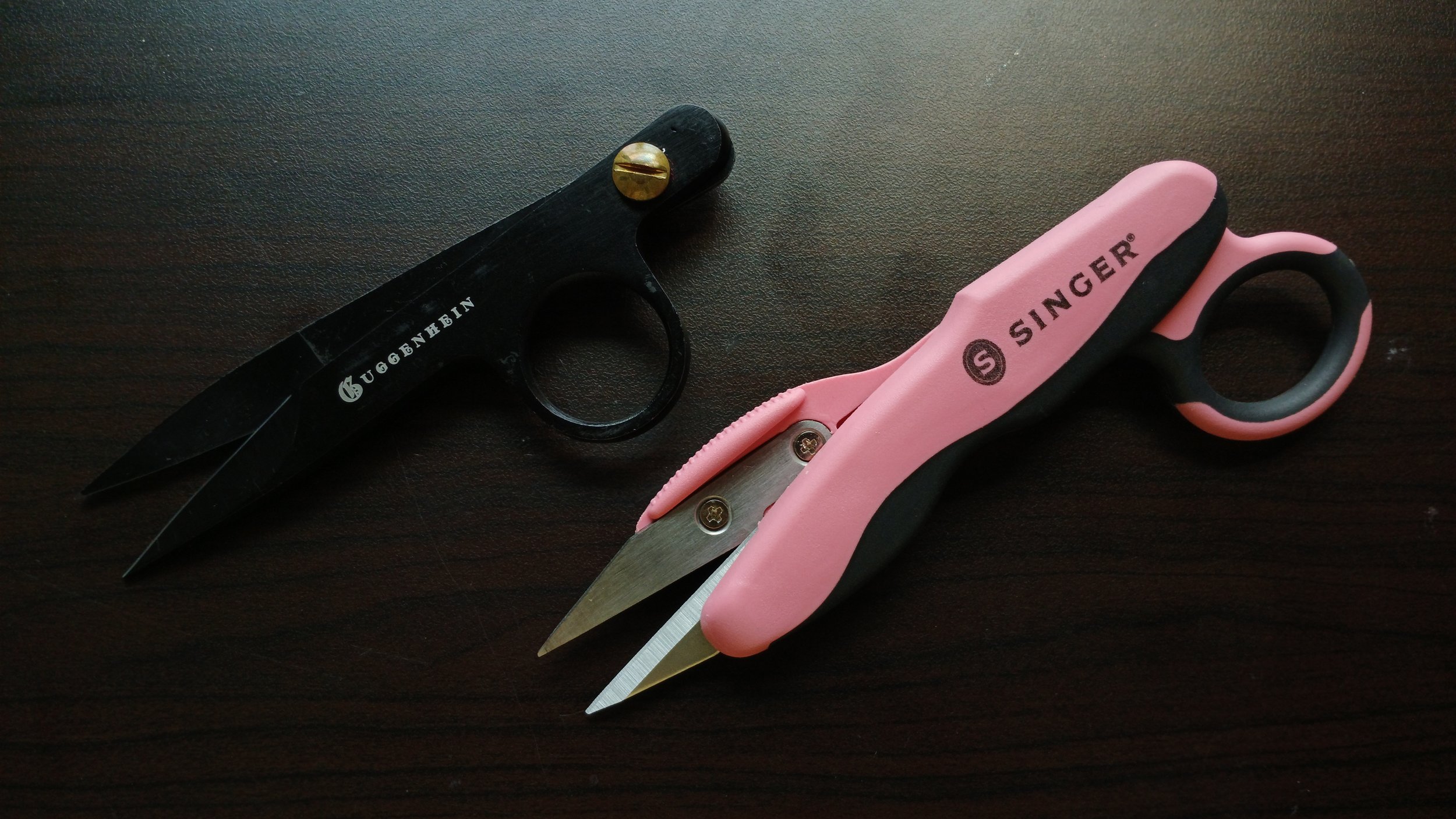
Thread Snips/Snippers
Then: kitchen scissors
Now: Guggenheim thread snips
My advice: Try things out and see what you like. Regular scissors work just fine, while snips give you more precision and take up less room.
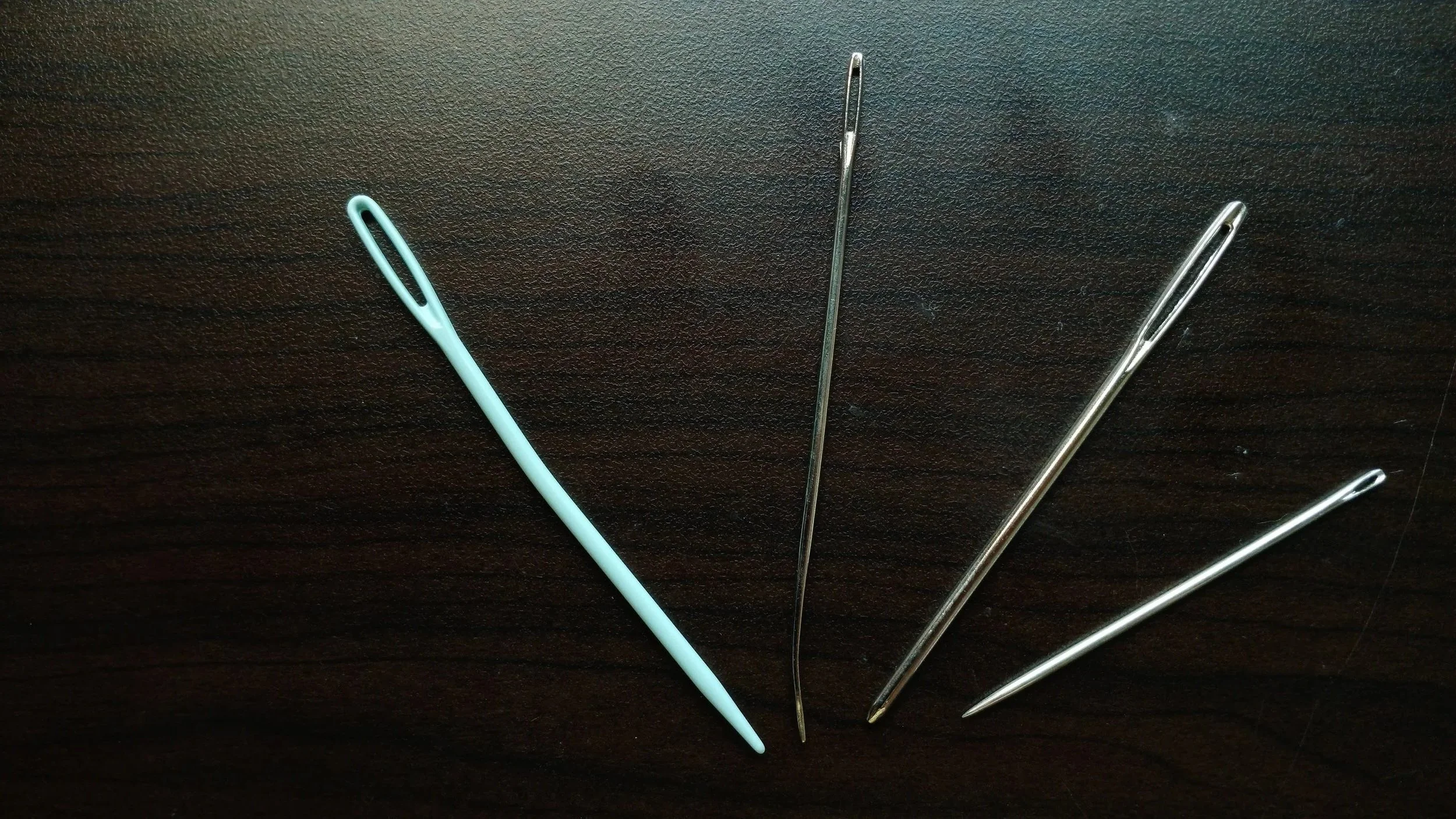
Yarn Needles
Then: upholstery needle
Now: Same one I started with!
My advice: Get a pack of yarn needles like this one! I got lucky after digging through my craft stash.
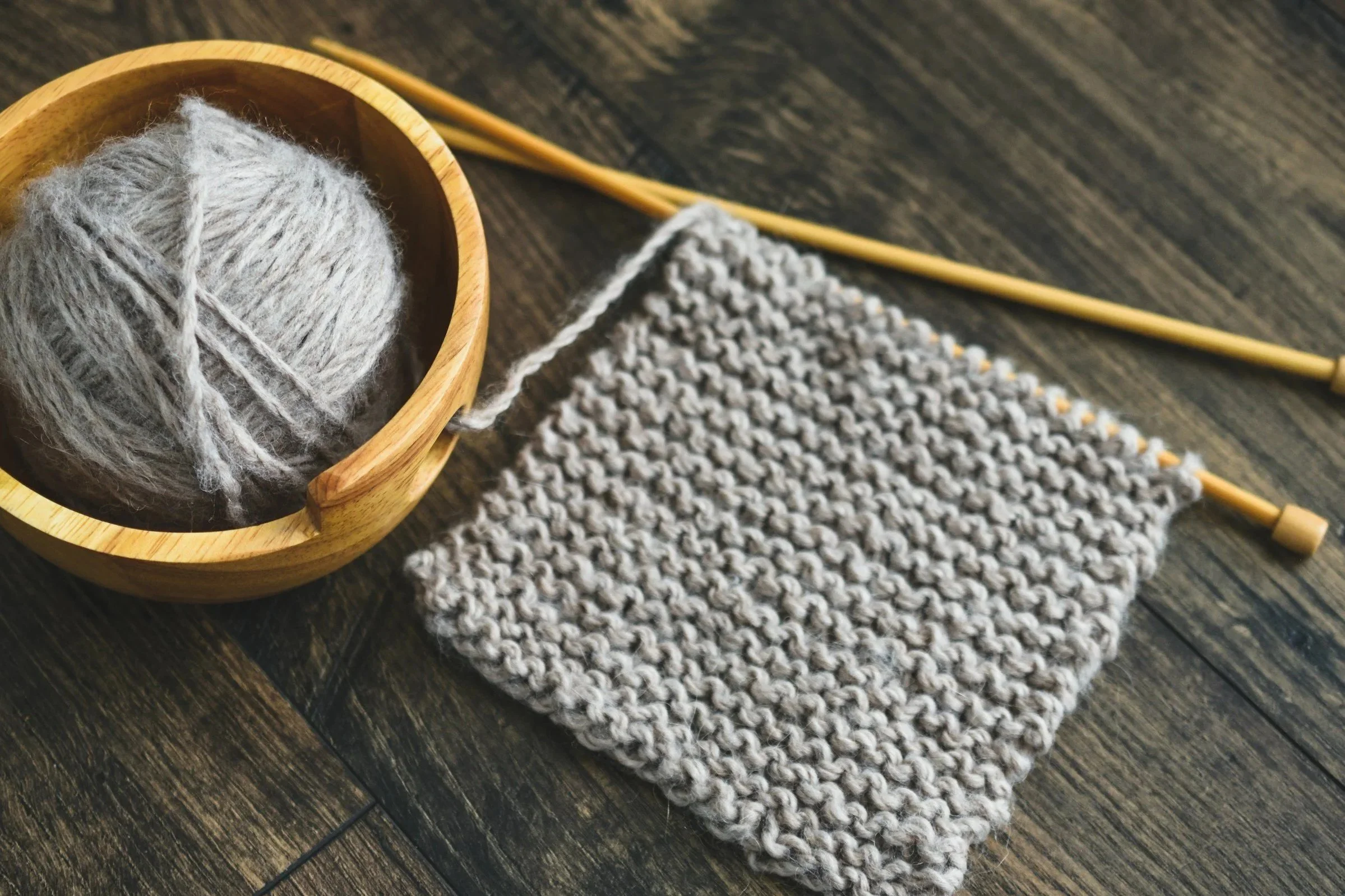
Yarn Bowl or Holder
Then: floor
Now: floor, fruit bowl, tote bag, backpack, fanny pack
My advice: I’d give this one a pass (at least at first). Deep kitchen bowls work great, and so does the floor.
Photo by Haley Parson on Unsplash
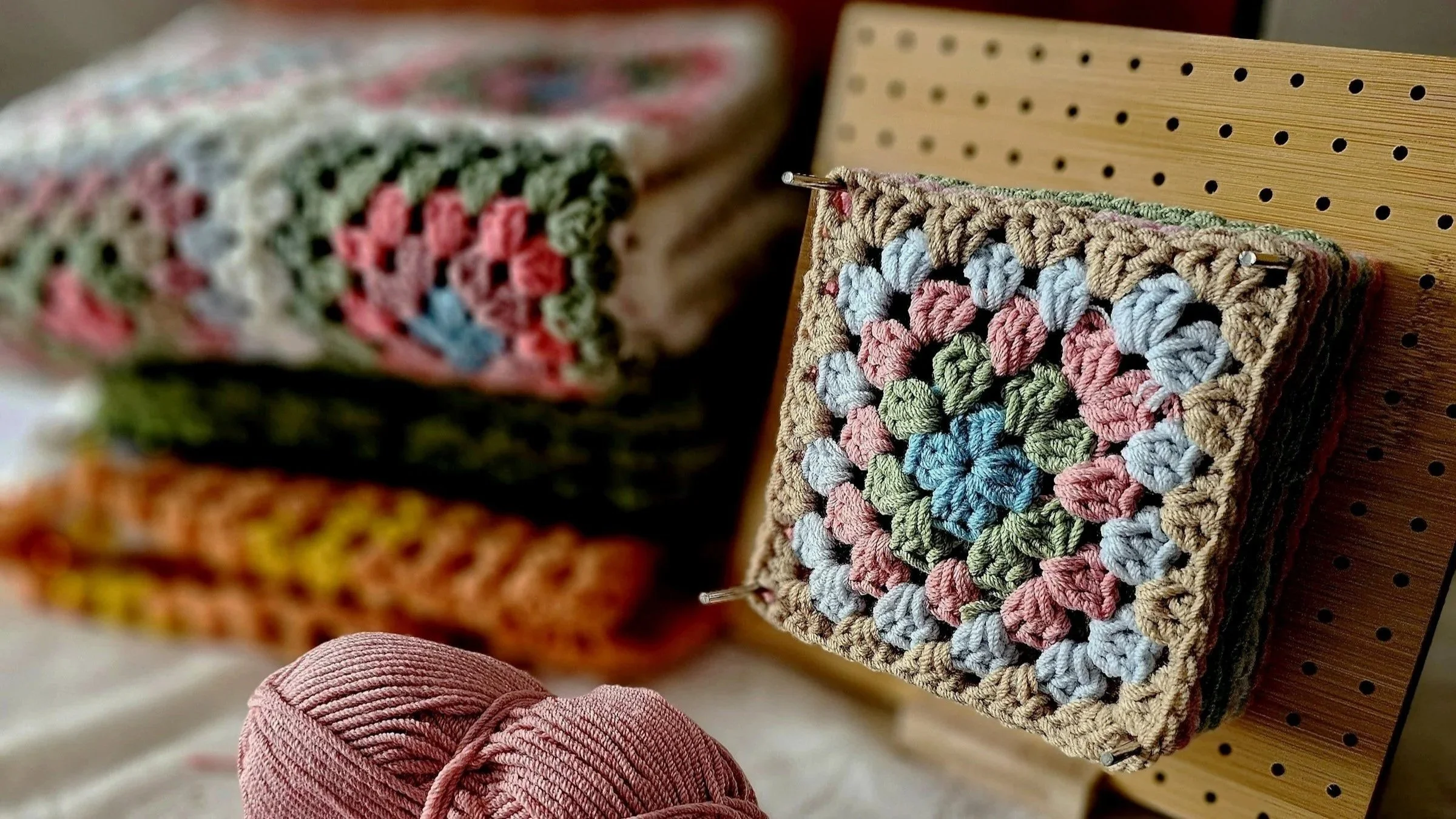
Blocking Board
Then: cardboard and hat pins, mesh desk organizer and skewers, towel and water
Now: Same!
My advice: If it ain’t broke, don’t fix it. It’s a pass for me, at least for beginners. Even now, I still use what I have. The mesh organizer I use helps me refine my project more than a pre-measured block.
Photo by Srozan Nadzmi on Unsplash
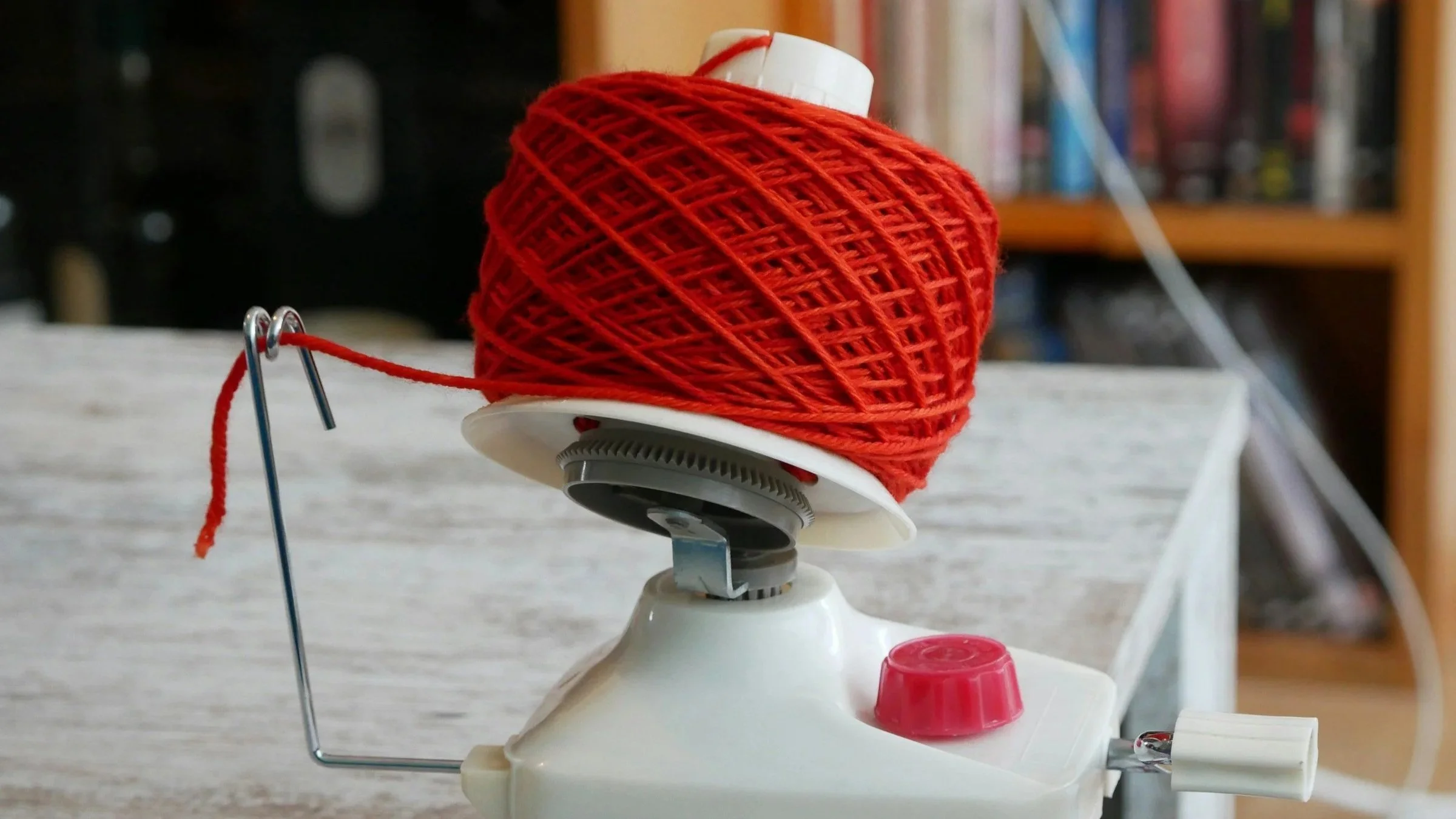
Yarn Cake Winder
Then: hand-winding
Now: hand-winding, requesting at indie yarn shops after purchase
My advice: Your call! These tools can help people with arthritis, or anyone who needs an accommodation. Even as my yarn stash grows - yes, collecting yarn is a hobby, come at me - I still wind by hand as I use skeins.
Committing to Crochet
Where to start
Craft supplies have to come from somewhere, so here are my favorite places to look:
Thrift & Antique Stores: This is like a treasure hunt - you may or may not find crochet goodies. I’ve found some shops that were gold mines, and others that were flat-out barren when it came to craft supplies. Do a little research ahead of time, know what you’re looking for, and be ready to dig around.
Craft & Art Stores: Craft stores are great places to get advice on products, and they often have extra guides or starter kits too. Just watch out for higher prices, and don’t let yourself get roped into buying a bunch of extra tools or premium materials as a beginner.
Value & Dollar Stores: Dollar stores can offer affordable entry-level craft supplies, including crochet hooks, yarn skeins, and stitch markers. Just know the yarn and tools usually aren’t top-tier, and they may not last as long.
Finding Community
The value a crochet community brings to an artist is immeasurable. Joining my crochet club on a college campus expanded my skills and my mindset dramatically. Inspiration surrounded me in a dimly lit classroom, with lo-fi girl beats in the background, excited chatter with my friends, more energy for our personal projects, and a real connection to the crafts of others. There, I learned unique stitches, mastered the basics, discovered new tools, and most importantly, found my people.
And it’s not just college clubs either. A lot of local libraries now offer makerspaces full of crafting supplies and host guided community crochet nights. Artist and craft cafes can be found in city centers too, giving people a place to caffeinate, create, and connect with fellow artists on their own or during hosted events. Even major craft stores host DIY events led by an experienced artist.
Started from the bottom, now you’re here
Starting to crochet, whether for the first time or for a new project, can - and will - be challenging. Finding your technique and memorizing stitches takes time and practice.
The Crochet Learning Path
Nail the basics: Practice, practice, practice your basic stitches, like single crochet (sc) and double crochet (dc).
Start with simple projects: Repetitive projects like scarves and amigurumi are my favorites for building stitch confidence and tension confidence.
Technique
Tension & Hook Holding: As you practice those foundational crochet stitches, you’ll figure out the most comfortable way to hold your yarn and your crochet hook. Here’s a guide we compiled (LFG tension and hook holding guide) to help you find your ideal tension and hook-holding combo.
Tools
Step-by-step video tutorials: This is the easiest way to learn, aside from watching a friend in real life. You can pause, play, and even slow the video down so you can catch every step. As I grew more confident in my technique, I started using a mix of written patterns and tutorials to learn the crochet language.
Free patterns on Pinterest and YouTube: Aside from crochet friends, Pinterest is your best friend for free inspiration, patterns, and tutorials. YouTube is your tutorial bestie, and videos are often linked inside Pins.
Stitch Guides: From beginner stitcher to seasoned crocheter, stitch guides (LFG guide) are an evergreen back-pocket tool.
So, how long does it take to get good at crochet?
It comes down to your own commitment and practice. The more you make, the better you get. There’s always a new skill or technique to learn, but to start…
Start small
Your first projects, let’s be honest, probably won’t be your best work - and that’s completely fine. Start with smaller, repetitive projects like a basic square, or this amigurumi duck, so you can get a handle on your skills. Getting good at crochet WILL take time as you learn stitches, figure out tension, and find your groove.
Be resourceful and thrifty
Use the materials you already have in your craft stash or around the house, connect with other crochet artists, then start shopping. Keeping your first purchases minimal gives you room to learn without getting buried under a huge upfront cost.
Practice and master the basics
Learn and get familiar with basic stitches and pattern language: single crochet (sc), double crochet (dc), slip stitch (sl st). Being able to read and translate a pattern is half the battle - the other half is mastery. I always keep a stitch guide (LFG guide) close by, even now as a seasoned artist - because, let’s be honest, that’s a lot to keep in your head.
Find your community
Find your people, sharpen your craft, build your skills, and build your friendships too.
Be gentle and patient with yourself
Crochet is weird. You’re making countless slip knots with a hook that slowly turns into a finished piece. Before long, you’ll start calling yourself a “hooker,” and you’ll realize that “frogging” is a real verb and not about hopping. Skills like tension, posture, and learning how to hold a crochet hook comfortably all come with practice. The muscle memory builds as you go.
In the end, it’s less about asking “how long does it take to get good at crochet?” and more about your own commitment to learning, failing, connecting, and growing.
Love,