How do I choose what type of yarn to use for my crochet project? Exploring Yarn Types
POV of my yarn shopping routine.
So, you walk into your local craft store (or yarn boutique), and gaze upon the endless, beautiful expanse of skeins of yarn. You start to sift through; fluffy, skinny, soft, kinda-soft, neon, neutrals…THERE’S SO MANY AND THEY’RE ALL SO PRETTY.
How the heck are you supposed to decide, without taking home the whole store?
This is where knowing what different types of yarn to choose comes in handy. Explore the guide below to learn about different yarn types, and how to pick the right yarn for your crochet project.
When in Rome (aka, yarn shopping)...
Regardless if you’re a seasoned crochet pro, or a newbie that’s never held a hook, ALWAYS ALWAYS ALWAYS go to a physical store and explore the yarn section - unless you know the EXACT yarn brand and dye lot and amount (the list goes on) you want for a project (or are willing to take a gamble).
Pick up the skeins of yarn, feel the textures, softness (or lack of), the heft, see the color with your own eyes. A yarn that looks so adorable online may actually be pretty “mid”. By yarn shopping in person, you get a real time sense of how your project is going to feel, how the yarn will work up, and maybe even a recommendation from a fellow crafter.
Plus, you get to see all of your options at once, rather than one at a time from a tiny thumbnail on your screen.
Features to look for when shopping for different types of yarn
Yarns types come in all shapes, sizes and materials. Let’s explore what each one means for choosing your next skein.
ALWAYS check the labels when shopping for yarn. This is where you’ll find fiber content, weight, and care instructions.
What is Yarn Weight?
Weight essentially means how “thick” the yarn is. Standardized weights range from 0 to 7, with 0 considered a fine lace to 7 considered jumbo yarn.
This yarn weight guide from Lion Brand Yarn shows the most common uses and hook sizes for each weight, and is a great reference when trying a range of projects. Most patterns also recommend a yarn weight, which should be used if you want to match gauge. Gauge for a crochet or knit project is the number of rows and stitches per inch; which helps crochet artists check that their projects match the final size of the pattern.
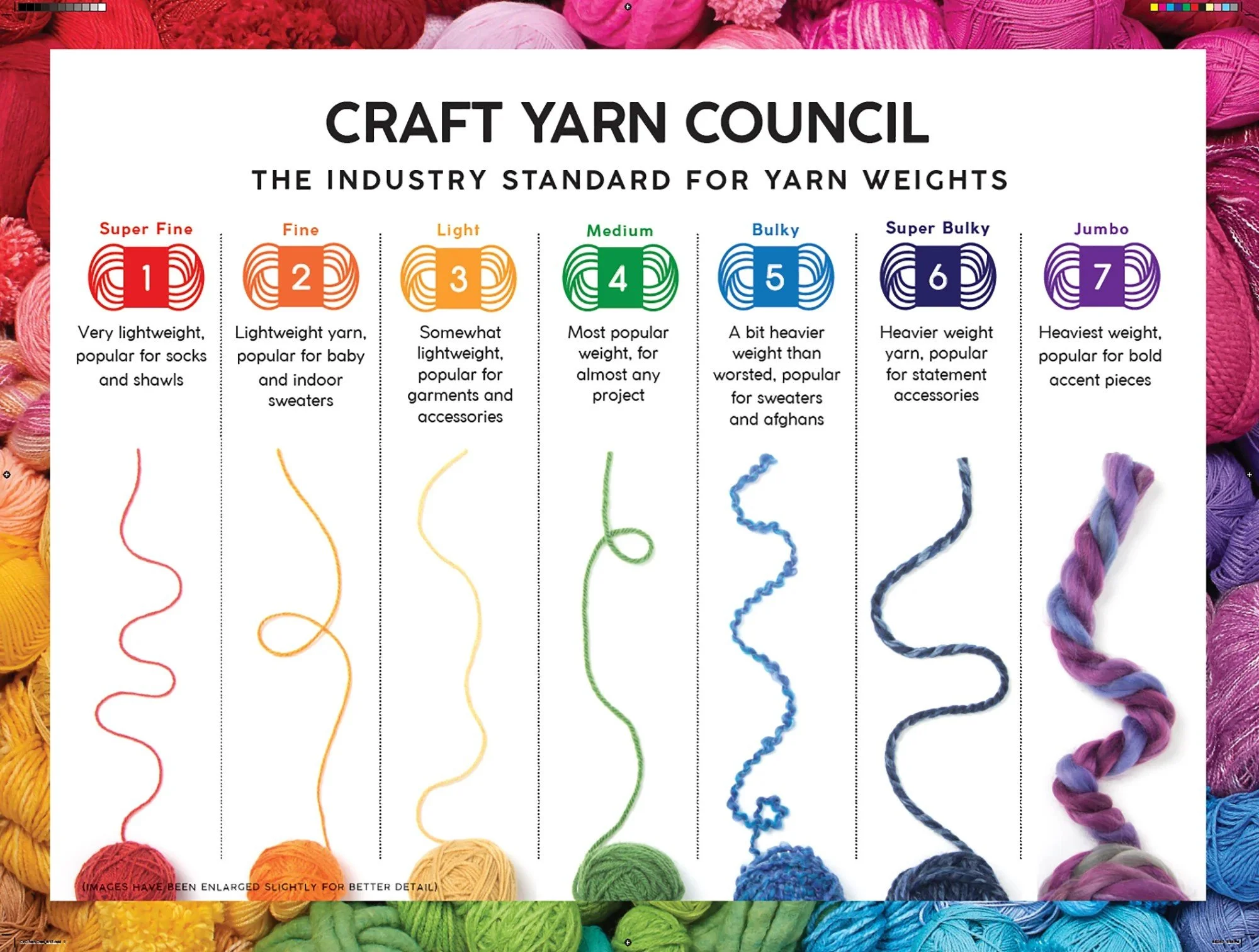
Standardized yarn weights and their uses. Source: Lion Brand Yarn
This guide is not the end-all-be-all. You can mix and match hooks and yarn weights to create truly unique crochet pieces! You could experiment with large hooks and a fine weight yarn to make a light, airy mesh shirt, or even sewing thread to make a blanket, as Instagram microcrochet artist, infinityandlesss did to make a human sized blanket out of microcrochet granny squares.
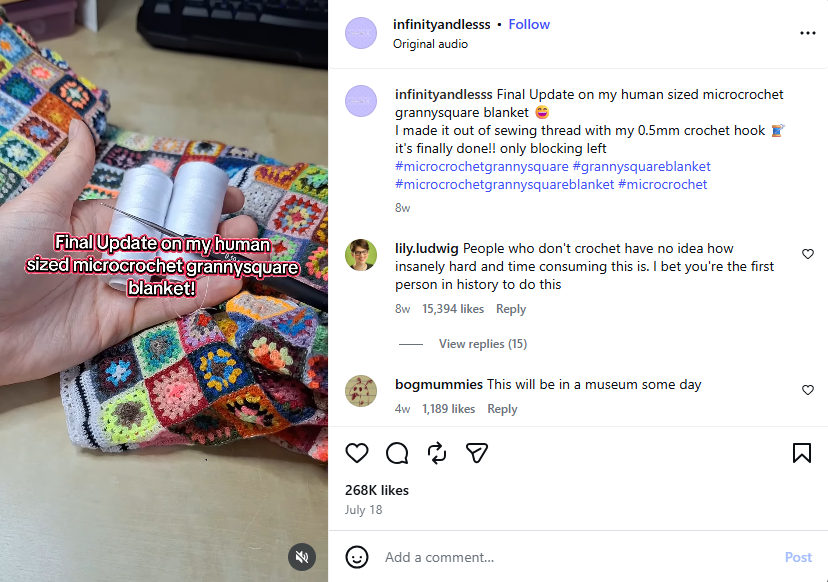
infinityandlesss made an entire blanket out of teeny-tiny crochet granny squares!
Fiber Content of Yarn
Fiber, fiber everywhere, and not a bit to eat.
Yeah, this type of fiber won’t help your digestive track, but can truly impact the feel of a finished project, and elevate it to a new level. Yarns can come in synthetic and natural fiber materials, and countless blends of each. For example: natural and synthetic blends including acrylic and cotton, full natural blends like alpaca wool and silk, and full synthetic blends like acrylic and nylon.
Synthetic Fiber Yarns
Synthetic fiber yarns are the most common yarn type you will find in major retail craft stores. Acrylic yarn is the most common, and probably what you think of when someone says “yarn”. Other common fibers include polyester and nylon.
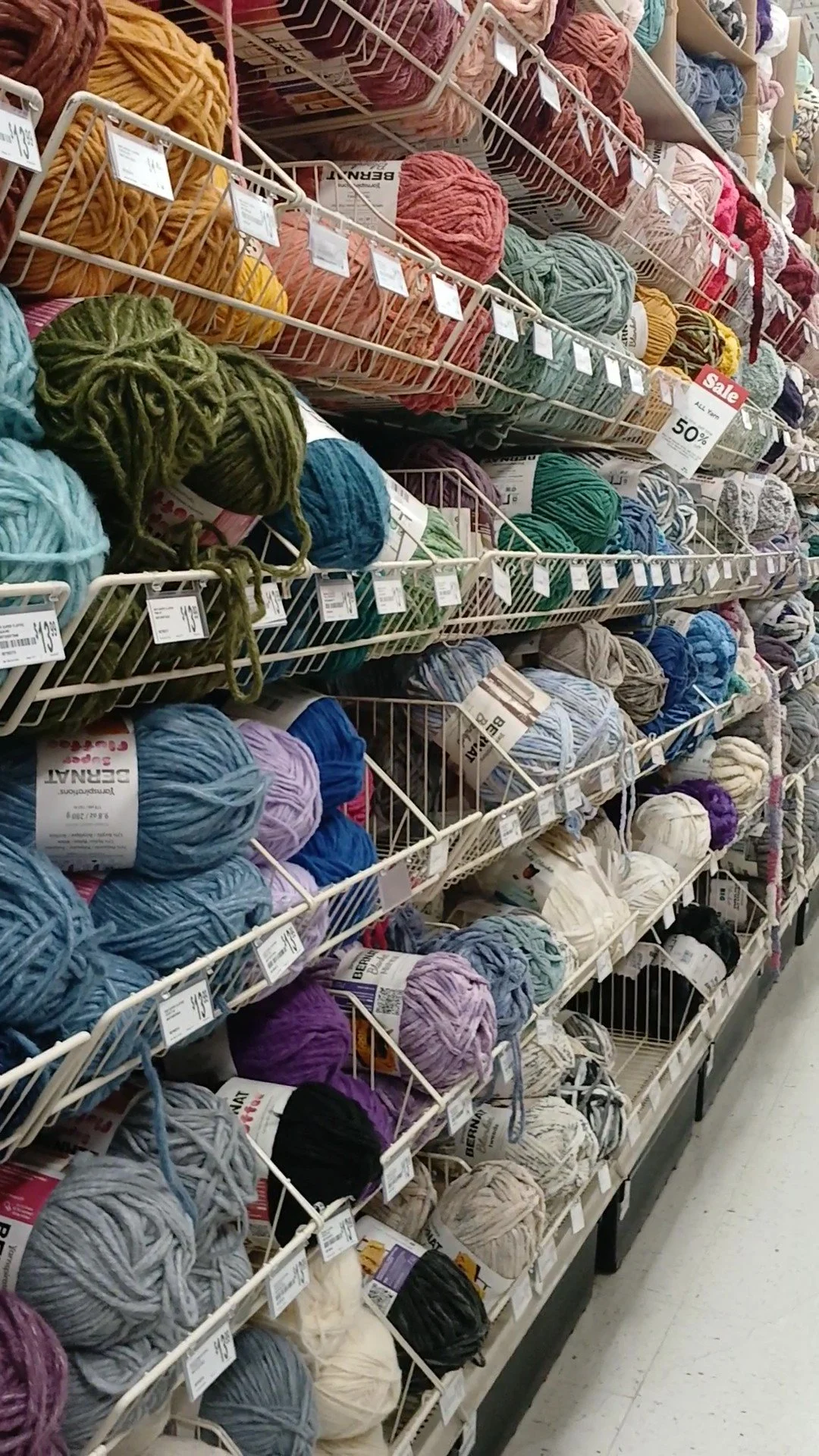
The endless expanse of synthetic fiber yarn at my local Michael’s Craft Store.
Synthetic fibers are often the most brightly colored, with countless (practically) identical skeins - which is convenient for larger projects. You’ll find the most bang for your buck when buying synthetic fibers: whether trying a small skein or a large mega yarn cake. Synthetic yarn also comes in a countless variety of styles and textures, from super plush and chunky blanket yarns, to fine and stretchy sock-weight yarns.
Some considerations when using synthetic fiber yarns
Synthetic fiber yarns are forms of plastic, which makes them more affordable and accessible. If put under too much heat (like a dryer), the plastic-based fibers may melt and fuse together - making your project lose softness and flexibility.
Many artists consider the environmental impacts of the plastic-based, almost fast-fashion feel of synthetic yarns, as explored in this 2026 Community News Service article from the University of Vermont.
Personally, I don’t LOVE full synthetic yarn, but it makes up a good chunk of my yarn stash. I find a medium weight acrylic yarn is the easiest and most predictable for building up projects quickly - and my recommendation for any beginner crochet artist. I’ve gathered most of it second-hand, with the occasional new purchase for a project for a friend - reducing the fast fashion feel of “buy a lot cheap and use quickly”. Keeping a garment for a long time or buying second-hand, regardless of material make up, is a form of sustainability.
Natural Fiber Yarns
Natural fibers come from two sources: plants and animal wool/hair. These are the most premium yarns, often hand-spun and dyed, starting from $20-$30 a skein. Each type of fiber has its own unique features from warmth to wash-ability.
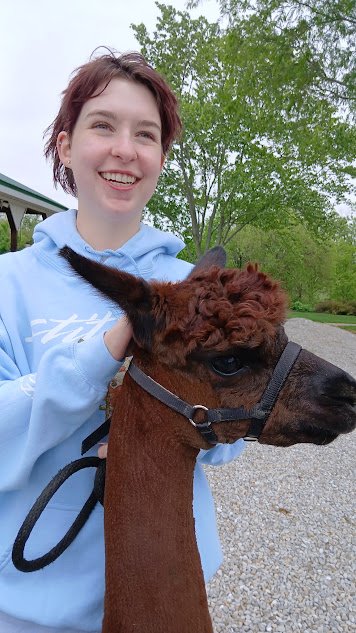
Le Froggy Granny founder, Courtney (me!), petting an alpaca on a special visit to an alpaca fiber farm in Ohio.
The alpaca obviously is having a better hair day.
Plant-Based Natural Fiber Yarns
Common plant-based yarns include cotton, bamboo, and linen. These are great for breathable, lighter-weight projects and wearables for warmer months.
Animal-Sourced Natural Fiber Yarns
Animal fiber yarns come from the wool or hair of an animal (or are produced by the animal, like silk from silk worms!). The process of harvesting the wool does no harm to the animals - it’s like a refreshing haircut!
Fiber farms are my favorite place to find animal fiber yarns. These farms - like ShayDay Fiber Arts that I love to visit - are fully dedicated to raising the animals, shearing, and processing the fiber into skeins of yarn for crafters - and often have an on-site shop!
My favorite animal fibers include merino wool (warm and durable) and alpaca (so soft!).
Things to consider when choosing what type of yarn to use
The yarn you choose for your projects is ultimately up to you! Here’s some important things to consider when determining your next skein pick.
Budget
So much yarn, only so much budget.
From smaller skeins to oversized yarn cakes, synthetic yarn is where you can get the most bang for your buck. This makes an easy entry point for beginners who may not want to spend a lot.
100% natural fiber yarns are best found at indie fiber shops, and can sometimes be found in major retail craft stores - most often, major retailers carry natural and synthetic fiber blends. These skeins come in a wide range of prices, from more budget-friendly (like 100% cotton or merino wool blend) to expensive exotics.
The Type of Crochet Project you are working on
From wearables to washables, consider the final use of your chosen project when looking for yarn.
Project Use
Natural fiber yarns have a wide range of uses: like cotton yarn for summertime tank tops, and wool mittens for staying warm in the winter. Synthetic yarns tend to hold heat very well, as they are plastic-based.
Washing and Care
Many synthetic and synthetic blend yarns you find in major retail craft stores are machine washable! Some can even be put in the dryer on a low heat setting. Check (and save) your yarn labels, noting which pieces you used that yarn for, for proper washing instructions. Just make sure to tie off and weave in your ends - or you’ll get yarn spaghetti in your washer.
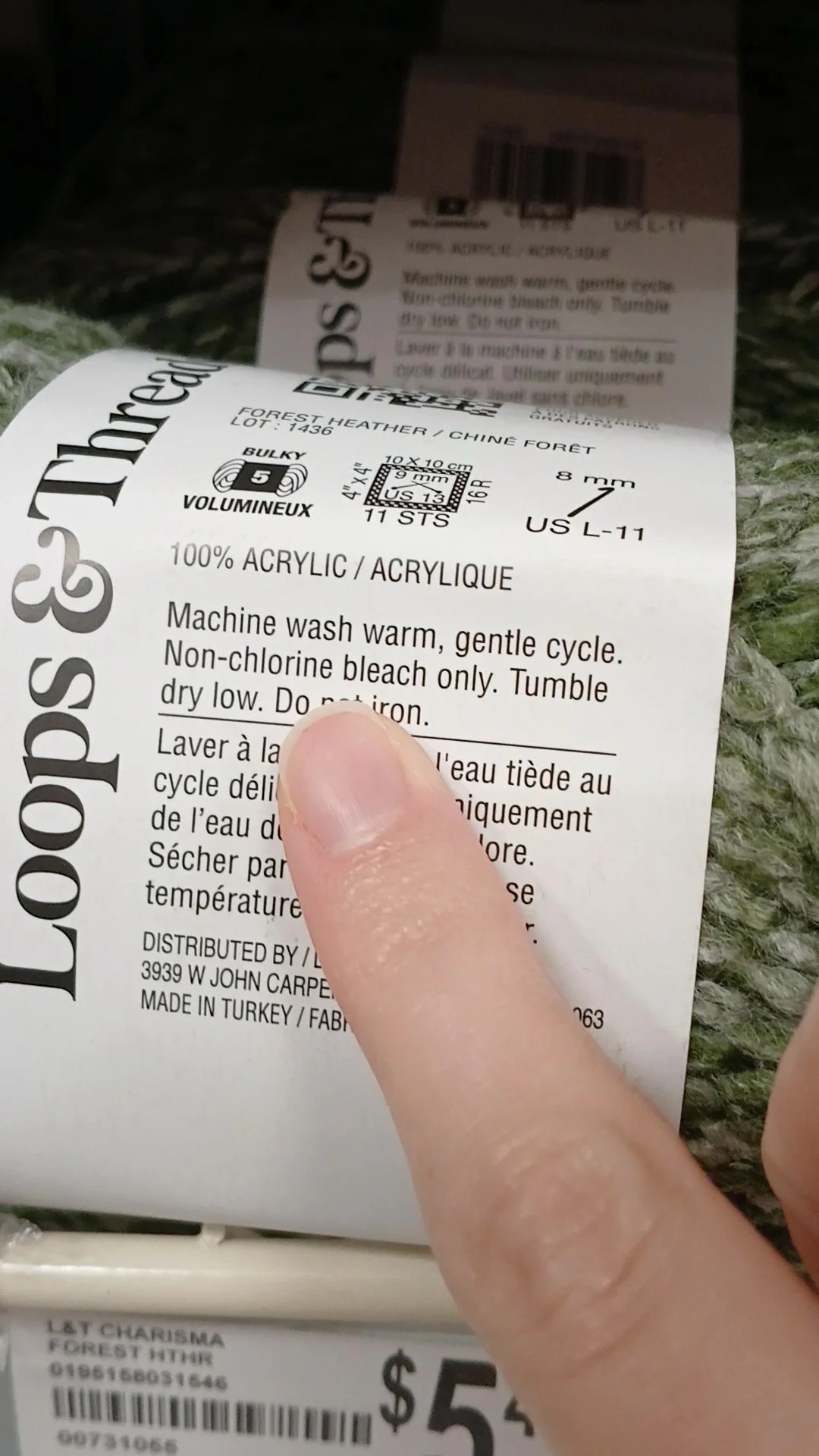
Most yarn labels include care instructions and fiber content on the labels.
Natural fibers are all over the board when it comes to washing instructions and care. Yarns like 100% Superwash Wool, are machine washable and can be put into a dryer. But be warned! Some natural fibers, like wool and cotton, will shrink when exposed to too much heat.
When in doubt, hand wash with a gentle detergent or clear, unscented dish soap, and lay out or hang dry your project.
Your Crochet Skill Level and Ability
For my beginners, don’t start with the super skinny lace-weight yarn you can’t see! Or the SUPER chunky blanket yarn you crochet with your hands.
Medium-to-heavy weight yarn is best for beginners, and is common across beginner level projects. Yarn weights of 4 to 5, and hooks from 4.5mm to 5.5mm are what I started with, and recommend beginners use. It’s easier to see stitches and practice your tension, without eye strain or unruly project sizes.
For my more experienced crochet artists, use what yarns best suit your skills and preferences. I tend to like medium weight (4-5) yarns, because they work up quickly, and are super versatile across projects.
Ultimately, the yarn fiber choice is yours
Yarn is a never-ending world to trek in. With limitless colors and fiber contents, you can always find something new and exciting. Remember, consider your project, budget, and skill level, when searching, and ultimately, have fun!
Until next time,